FRNDY LMRN

Inspiration at its finest

  • Home
  • SUBMISSIONS
  • SHOP
  • PRESS
  • About
EdChoppoFrendyOriginals.jpg

Ed Choppo

February 24, 2018 by Frendy Lemorin in Original Stories

It’s truly a blessing to meet someone who instantly comprehends your vibe.  This was precisely the case for Eddie Omari-Rivers and I.  Our distinguished mutual friend, Amir Almaimani, introduced us to each other and ever since our very first encounter, we’ve been communicating like long lost brothers.

Eddie, better known as “Ed Choppo,” is a humble yet passionate soul with many talents.  Not only is he an excellent cook—thanks to his grandmother who opened up the very first African cuisine in New York—and athlete, Choppo is also a New York City-based Health Consultant whose clientele consists of some of the wealthiest people on the planet!

Despite his stellar success, the self-made 29-year-old remains hungry and focused on inspiring whomever he comes across.   I recently sat down with the South Bronx native to discuss his humble beginnings in the concrete jungle, adoration for cooking, fitness regimen, and motivation behind his unremitting work ethic.  Check out our in-depth conversation below:

FRENDY: Ed, thanks for having me over so we could chop it up for a bit.  I know you’re an extremely busy guy.

ED: F#ck all that busy sh*t! You make time for whatever you want to make time for.

FRENDY: Exactly!  The very first time we caught up you whipped up an exceptional meal.  I know your beloved grandmother taught you how to cook and all, but how long did it actually take to get this good?

ED:  I can’t really put a time period on it.  I could just tell you that I cook, cook, cook—everyday I try to spice it up. It’s trial and error.

EdChoppoFrendyOriginals1.JPG

FRENDY: Do you remember the first dish you prepared?

ED: Yeah, I’m actually known for this, all my college mates know me for it.  It’s baked barbeque chicken with potatoes and carrots—the chicken falls off the f#ckin’ bone.  That’s what we survived on in college ‘cause in Vermont every f#ckin’ restaurant closes at around 8pm. You have a bunch of inner city kids who are trying to eat good, the only thing we had were tater tots and Denny’s…

FRENDY: You weren’t messing with that…

ED: Nah.  Sh*t ain’t no food man *Laughs*.

FRENDY: So you were kind of forced to cook? I mean, you love doing it, I’m sure it wasn’t a burden.

ED: I love cooking, but I had no choice. When you have no choice, you learn to adapt quick.

FRENDY: Would you say that was the moment you took cooking seriously? 

ED: I started taking it seriously while in college, but not when I was cooking in my dorm room. I really took it up a notch during my sophomore year when I started taking a nutrition course where I learned about food groups and its effect on the body.  Once I implemented that in my cooking, that was when I was mind blown.  I guess that’s when I was addicted to it.

FRENDY: From then on, it just took over your life…

ED: I used to cook like three times a week at school.  It was also a hustle—I was just cooking for my basketball homies.  I would bake the chicken for like six hours at 275 degrees; the aroma would just spread throughout the whole building I was staying in. So one day, one of my homies suggested that I should charge $5 a plate.  I started doing it and made a killing!

FRENDY: That’s awesome. It’s all about cultivating good energy, which is one of the main reasons you started cooking right?

ED: I always found that food and sports are two mechanisms that bring people together—you never see people argue or fuss while they’re having a great meal.  You do see the joy that people get.  If you’re the person that cooks the food, you see it in a person after they eat. That’s a priceless feeling.

FRENDY: I noticed that you didn’t make yourself a plate after you served me that bomb meal.  Do you normally not eat with your guests?

ED: Yeah, I don’t. Some people hate me for it, but it’s my grandmother’s tradition.  I’ve cooked for the masses and they would all want me to eat with them. I tell ‘em go to hell * Laughs *.

FRENDY:  We’ll get back to the food in a minute—let’s talk about your origin. I’ve lived in New York for about 20 some odd years and only have been to the Bronx at most 2 times. It seems so distant to me *Laughs *. How’d you like living there?

ED: I love it man—I’m Southside certified. I was born in the Bronx…you see the grin on my face…I love the Bronx.  I’m from the Southside—I’m from the heart of it.  The Bronx is a city in itself with all different races interacting with each other.

EdChoppoFrendyOriginals2.jpeg

FRENDY: What was your childhood like? Were you running around with the “hood” kids, or were you disciplined enough not to?

ED: I was always disciplined in the way I was raised, but as my grandmother always said, I was always a little fearless and stubborn-hearted.  So, I know what is right from wrong, but I’m going to do whatever I need to do at a particular moment.  As a kid I was always into sports, my dad was never around that much.  He left when I was two and I didn’t meet him until I was 26 or so.

I spent most of my childhood with my grandmother.  My mom was always going to nursing school, so I grew up thinking my granny was my mom. When I was sent to Africa at the age of six she came along with me. I always called her “momma.”

FRENDY: Why were you sent to Africa at the age of six?

ED: It’s a cultural thing, you know. My mom side of the family wanted to see me—I had to go back there to do some ritual sh*t.  That’s a story for another day.  My mom sent me to Ghana for like four years. Then, my daddy side of the family wanted to see me so I went to Ethiopia for another four years. I came back to the states for 8th grade, high school and college.

FRENDY: Oh, so most of your childhood was spent in Africa?

ED: Yeah, that’s why I see the world the way that I do.  As much as living in Africa impacted me, the Bronx did that same thing but in a different magnitude.

FRENDY: I think that’s why you’re so balanced as an individual. If someone met you for the very first time he/she would think you’re an absolute menace appearance wise, when in reality you’re extremely grounded and introspective.

ED: That’s my whole approach. Growing up in the Bronx made me like that.  I lost a lot of people I loved at a young age to nonsense violence.  When I came back to the Bronx, all my homies were grown. I remember my friend “Fresh,” he went from being a skinny bull who always kept getting picked on to a person who never left his house without a gun.

FRENDY: Do you think that would have been you as well if you stayed in the BX?

ED: Nah.  My uncle was the head of a gang and I always told him as a kid that the gangbanging sh*t is stupid.  He asked me why and I said if I have a problem with someone it’s because I have a problem with them, not because so and so I know that is in the same set as me have a problem with them.  He later explained to me that being in a gang isn’t really like that—people that do that are really f#cking up the game.  He said it’s all about representing your set, taking care of the community.

FRENDY: It’s like a family…

ED: Yeah. Back then the police used to come in the neighborhoods and f#ck up the community and do whatever they wanted. So the gang members were like the gatekeepers, you dig?  But now it turned to some other dumb sh*t.  I’m always going to do what I want to do. 

See there’s one thing I learned about the hood—when you respect yourself and stand up for what you believe in, even the OGs salute you.  I tell them you do that gangbanging sh*t, that ain’t me.  I ain’t about that life. 

FRENDY: As long as you remain true to yourself, it doesn’t matter if you’re a gangster or not…

ED: Even the gangsters are going to salute you.

FRENDY: Right.

ED: See, I love the Bronx because I met all types of people.  If I was to go to the South Bronx with you right now, you’ll be shocked on how many people I know. I learned so much from them. The biggest trappers etc. would tell me “yo youngin’ keep hoopin’, f#ck this sh*t.  This is no way of life.” 

Every real drug dealer I’ve ever met, never tried to tell a n*gga from the hood to do what they do. I’m sure if you go to a couple of hoods in America you’ll find some kids that will tell you the same sh*t.   Hearing all of this at such a young age made me move a bit different.  I was raised and schooled by some real OGs, you know?

FRENDY: So when you returned to the Bronx, which school did you attend?

ED: I went to Paul Robeson middle school, I.S 183.  Initially I wanted to go to 162, but they wouldn’t put me there because all my homies went to the school. We were all known for being troublemakers at that time.   Just a bunch of wasted youth man, we didn’t know any better.

FRENDY: Although you were a rowdy kid, you still knew what was right from wrong obviously…

ED: Yeah, I always stood up for what I believed in.  I wasn’t the type to condone dumb shit, like If I wasn’t going to do it I won’t influence my n*gga to do it.  I think that’s part of the reason why I was so protected growing up, even when my uncle went to Jail.  He actually just came home after a 20-year bid. 

FRENDY: How were you doing in school? What were your grades looking like?

ED: The American school system is funny to me.  I don’t know if it’s because of the time I spent in Africa or not.  When I was in Ghana under the British education system, it was better. When I came back to the states, I was put in grade six because of my age.  I was there for about a month. Then the school placed me in grade eight.

FRENDY: Why did that happen?

ED: Because I was too advanced for that sh*t—the American education system is easy in a way because they test us on memory and less on wisdom and intelligence.  I’m a visual person so it’s really easy for me to memorize something. I never really took school serious, but I did have the second highest SAT score in my HS.

FRENDY: Which HS was that?

ED:   This is Life Science Secondary High School on the Upper East Side.  I think they changed it to a charter school now.  My grandmother taught me a lot back in Africa.  I was actually homeschooled by her—she was teaching me about Selassie, Malcolm and Marcus Garvey.

FRENDY: It was beyond food with her…

ED: Yeah—my grandmother is a G, man.

FRENDY: When you were living in Ghana, your mother wasn’t around?

ED:  Nah, she was back in New York City going to nursing school.

FRENDY: How about your dad?

ED: Nah, he left when I was real young. We never really kept in touch until I was around 26.  I have my mother’s heart, but the majority of my personality is my dad—he’s an arrogant piece of shit. I’m not proud of it...I have his blood in me.  I’m trying to balance everything out. I’ll figure it out one day.

FRENDY: What was the reason behind your mom’s move to America?

ED: She came here for school. My grandmother had a store on 225th and White Plains road called “African Queen.” It might still be there, who knows.  She was importing traditional African goods to the states that people needed. Stuff like fufu, peanuts and all the other traditional essentials of North African cuisine.

Ghana is known for two things: gold and cocoa.  Cocoa you can make chocolate out of it—my family own plenty farms of it. When it turns yellow, you cut it and eat it fresh.  It’s one of the best fruits you can ever f#cking eat.  She noticed in the neighborhood that there was a bunch of Jamaicans, and they loved bleaching their skin.  Skin bleaching is very big in the West Indian islands—look at Vybz Kartel.  So there’s a huge market for that. My grandmother would take one of the key supplements in bleaching, which is cocoa.  The dried shell of the cocoa is smashed up to produce an essential oil to help the skin bleach naturally.  She would mix that with other chemicals, and that would be the moneymaker.   She used all of the money to open a restaurant.  She had an apartment right above the CBS studios on 50 something street for years before she passed.

EdChoppoFrendyOriginals3.jpeg

FRENDY: When we spoke for the first time, you mentioned that you became homeless for a while.  How did that end up happening?

ED: It’s because granny died when I was 15. My granny was the head of the household. She had a will so she shared all of her wealth amongst her many kids and sisters’ kids. Although wealth was spread out, family members were still fighting to get a piece of the pie. The restaurant and the apartment in the Bronx was supposed to go to my mom, but someone in the family, who’s known for using witchcraft (most people in the Western world call it voodoo) wanted it. So my mom gave that sh*t up. My mom avoids confrontation at all cost. She’s a God-fearing woman.

FRENDY: So I guess when that happened your mom didn’t have anything?

ED: She was counting on the love of her life, which is my dad.   My dad had this two-bedroom condo on 455 Jackson Ave. in the Bronx. That was when it was dirt poor over there. We stayed there for a bit until we got kicked out.  That was when my mom had a year or two left in nursing school.  My mom and dad were beefing during that time so he sold the apartment. We didn’t have anywhere else to go.

FRENDY: How long were you guys homeless?

ED: For two years.

FRENDY: Where were y’all staying?

ED: Churches, restaurants, bathrooms, buses, trains.  I hated shelters. During those times I never lost faith, but I was always questioning it.

FRENDY: Were you able to go to schools during that time?

ED: Yeah, I went to school everyday with a smile on my f#ckin’ face.  I used to take showers with restaurant soup bowls and napkins and sh*t. So I used to go to school and stay after school to shoot hoops. 

FRENDY: Wow, so even during all of your trials and tribulations, you still kept a smile in your face…

ED:   I had to—I didn’t have a choice. My momma assured me that the good Lord was putting us through this for greater things. Sometimes I believed it and sometimes I questioned it.  It’s hard to believe that sh*t when you haven’t eating in 3 days and only been drinking Tropical Fantasy sodas—I used to drink four of those sh*ts a day. I was charged up!

FRENDY: Were you playing sports while in school?

ED: Yeah, yeah I was playing HS basketball and soccer.

FRENDY: Would you say that playing sports was an escape for you?

ED: Yeah, basketball is definitely an escape for me. I love basketball because it allowed me to get rid of some pain. Shooting hoops gave me a relieving feeling.

FRENDY: There wasn’t any sort of tuition to pay for school?

ED: Nah.

FRENDY: Oh, that’s really good. Do you consider the homeless stage of of your life as fuel that made you focus on things like sports etc.?

ED: Nah, if I said that I would be lying. Because even when I was playing sports I was never focused.  While I’m at practice, I would wonder where I would sleep at night.  Although playing sports was an outlet for me, I was never fully able to concentrate or focus as much as I wanted to.  I gave up soccer after my freshman year.

FRENDY: Why did you give it up?

ED: Because there was too many f#ckin’ rules.   The rules weren’t matching up, or the demands of the coach.

FRENDY: What’s one rule that you truly detested?

ED: Showing up to practice an hour early.

FRENDY: So, in basketball you didn’t have to do that?

ED: No.  As long as you were on time for practice, there was no problem.

FRENDY: So soccer was too structured for you?

ED: I wouldn’t say that. It was the winter months and I didn’t feel like staying in the cold an hour early when the coaches would show up for 10 minutes.  So why the f#ck would I be there an hour early…

FRENDY: * Laughs * so you straight up stopped going…

ED: Yeah—I also stopped playing because I was often compared to my dad a lot.  He was a big soccer player back home.  My approach to sports was way different from my dad’s.

FRENDY: That’s pretty funny. I remember you telling me that you played college sports.  Which college did you attend?

ED: I went to the University of Vermont.

FRENDY: Did you get a scholarship to play ball there or what?

ED: Yeah, it was soccer first then I started fucking around…

FRENDY: Wait a minute, even when you quit playing soccer during your freshman yeah in HS you still got a scholarship?

ED: Yeah…I would go to like camps in this place called Sports Science at Delaware State University. To this day I love soccer.

FRENDY: What was so different between playing soccer in HS and camp?

ED: I learned discipline in sports at camp and how to really approach it. 

FRENDY: What made it more enjoyable than playing soccer at school?

ED: It was challenging. The camp was called called “Sports Challenge.”  The sports part is what really gets the kids involved, but the challenge part, most of us weren’t prepared for it.   If you stuck with it, you’ll come out a little different.

FRENDY:  Was UVM your first college of choice to attend?

ED: Nah.  I had Norfolk State, Virginia Commonwealth, and NYU.

FRENDY: They all wanted to recruit you for specifically for basketball or soccer?

ED: Both.  I originally wanted to go to NYU because of their academics, but as a youth I used to party there a lot.   So I know if I went to school there I wouldn’t be able to focus—I also needed a break from the city.

FRENDY:   What was your first impression of Vermont?

ED:  It was good!  It was the first time I saw people leave their apartment doors wide open to drop their garbage out. It was a breath of fresh air and it changed my perspective—I would say Vermont made me a better person.

EdChoppoFrendyOriginals4.jpg

FRENDY: What compelled you to go to the University of Vermont and not any of those other schools you named?

ED: I knew some of the coaches from there; I met them at a camp up in Syracuse when I was 16.

FRENDY: Did you play sports during all four years of college?

ED: I played one year of soccer and basketball and then took a break. 

FRENDY: Why did you take a break?

ED: It was too political. Playing sports on a collegiate level is too political, that’s when I knew it was more for business than anything else.   Also, at the time I was going through a lot of sh*t—I lost my grandmother, I broke my left ankle. They wanted me to have surgery on it, but lucky for me I formed this very beautiful bond with UVM’s head athletic trainer and former Olympian Mike Kampler.  Mike is definitely the reason why I train now.  He helped me understand what training is all about.

FRENDY: Did Mike prevent you from having the surgery?

ED:   I was told by the doctors at UVM that surgery was my only option, but I said f#ck that, they’re just trying to get a n*gga back in the field as soon as possible—we were having a great year at the time.  They wanted to drill and put screws in my leg, I didn’t want to do that.  Mike told me that I didn’t need surgery.   He told me that it’s not good at all to have screws in your ankle.  You remember Grant Hill?

FRENDY: Of course, he was one of my favorite players back in the day.  He was a very explosive player in the beginning of his NBA career…

ED: Well, he lost about six to seven years of his prime because he elected to have an ankle surgery. Not just a regular ankle surgery, but also the same sh*t I was about to have where they put two screws to hold it together.   It’s a quick process and allows you to get back on the playing field.  However, the nerves at the bottom of your feet where the screws are not meant to be tampered with—at any given point they can get infected. When it gets infected, a three-month process becomes a nine months to a year recovery time.

FRENDY: Ah, ok. It makes more sense now because Grant really wasn’t the same after he came back to the court after his surgery.

ED: He tried coming back, but the ankle issue was always there.   There’s a documentary out there on him.  You should watch it. It f*cked him up…he couldn’t move, he almost died ‘cause of that sh*t, bro.  Because the ankle got infected, which caused other complications.

So yeah, Mike told me all that sh*t and said that he could help me recover. 

FRENDY: Throughout your recovery process with Mike, your love of training was birthed.  That’s remarkable.

ED: Yeah, I remember he told me that I was going to end up doing this sh*t!  And I’m like “Mike, what would make you say that?”   At the time, I told him “f#ck no, you see all the sh*t you got to deal with?”.  He just laughed and replied “Ed, if there’s only one thing I know about you its that you like helping people.  Just remember I told you this.”  So every time Mike and I speak, I always bring that memory up.  He’s my guru.

EdChoppoFrendyOriginals5.JPG

FRENDY: What’s divine about your life is that you always came across a figure that guided you down the right path…

ED: True.  But there’s certain types of people that try to play that “figure” role and I don’t even vibe or f#ck with them because it seems forced.

FRENDY: During your healing process, were you still attending class?

ED: Nah, I wasn’t going to class anymore. I never really went to class. I was only interested in Law, Philosophy and Marketing because I figured I could apply those three things in my everyday life. College is made to really form new friendships.

FRENDY: Wait, weren’t you there with a scholarship?

ED: Well, I knew the GPA that I had to get in order to maintain that scholarship.  I would get that GPA.

FRENDY: What were you doing instead of going to class?

ED: I was traveling around, probably in New York or LA somewhere.

FRENDY: * Laughs * But you would still take your finals right?

ED: Yeah. So, I’ll have the syllabus and I would turn in the most important work –all you had to do was email the sh*t.

FRENDY: Beating the system I see * Laughs *. Speaking of which, how did you and your mom escape homelessness?

ED: Well, eventually my mom graduated from nursing school and right off the bat she got a gig to be a UNICEF nurse in Honduras.  They gave her a huge check for that.

FRENDY: How old were you when this happened?

ED:  I was around 18…

FRENDY: Man, I’m glad you guys got out of that situation.  When did you actually decide to get into the fitness field?

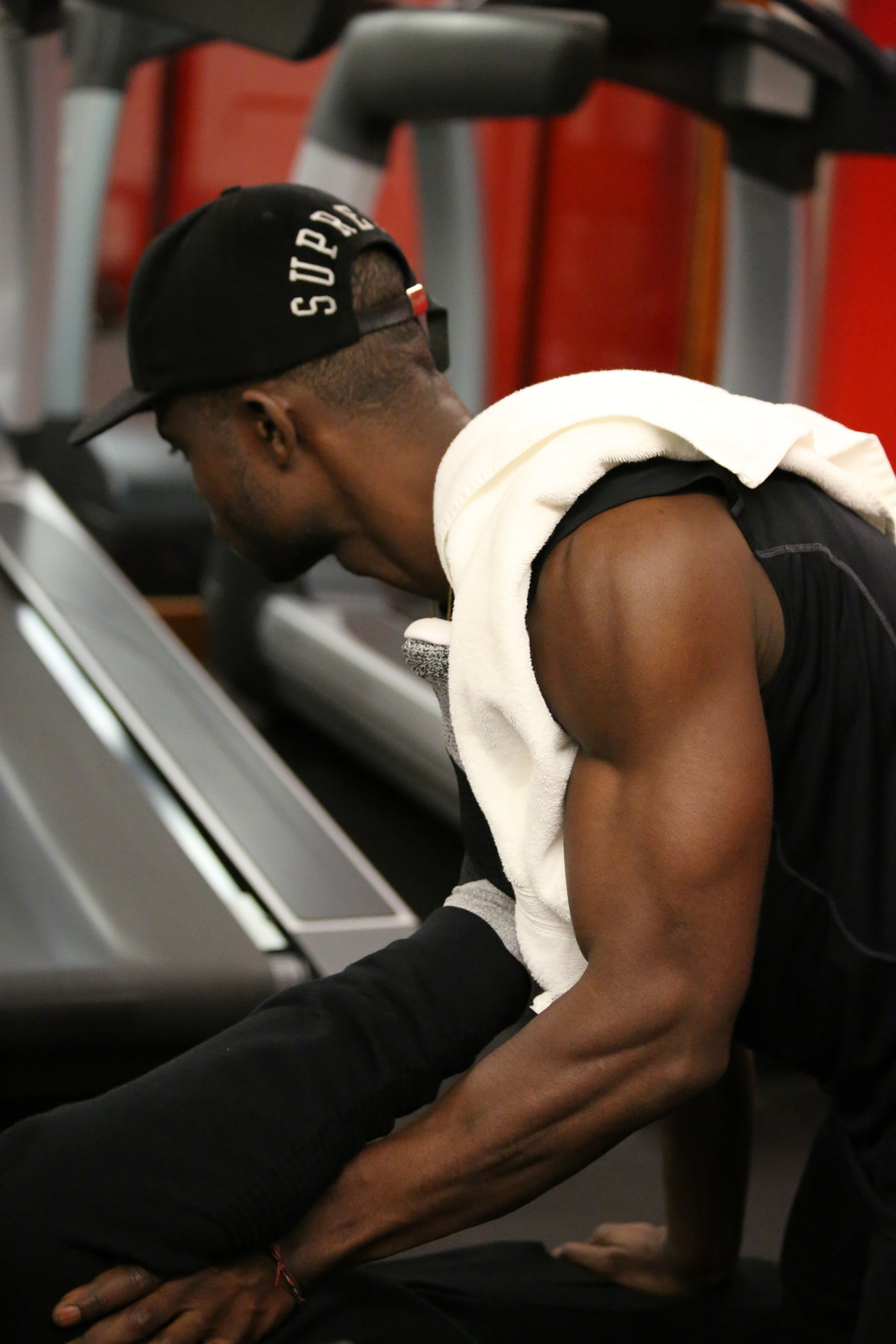
ED: I would say two or three years after college when I started at Equinox.  Once one of my clients told me how much money I would be able to make on my own rather than working for a company.
EdChoppoFrendyOriginals6.JPG

FRENDY: I heard about you through Amir and he always told me about you being a phenomenal basketball coach. How’d you get into that?

ED: Well, I always had a passion for the youth.  I was coaching while I was in college and after.  My HS coach also coached camps at NYC’s Columbia University (all of these Ivy League schools would have these basketball camps). My coach always took me with him so I could stay out of trouble.  He would have me run a few drills and from then on I connected with the kids.

After that, I started doing some AAU stuff also, but once I found out the business side of it, I said “f#ck this sh*t!”  I stopped doing it and just did my own thing. 

FRENDY: You basically learned the fundamentals of being a coach and left the circuit…

ED: I wouldn’t even call myself a coach. I think part of the reason why the kids that I worked with f#cked with me the way they did was ‘cause I didn’t take that approach.  I didn’t take the coach approach—I was one of them.  They can relate to me. I always tell people that if you can keep it real with the young ones, they’ll forever keep it 100 with you.

To be honest you with you, my HS basketball coach Michael Murphy played a really intricate part in my life.  He always kept me out of trouble.

FRENDY: Were you only coaching basketball or other sports as well?

ED: One thing I wish most people would understand is that no matter what your field of occupation is, what your job description is it is never just that.  You know?   I would be with these kids from the basketball court to the weight room for hours on end. After that, I would watch them eat sh*t! They were destroying what we were trying to build.  That inspired me to cook for them.  When you spend that much time with people, especially kids, you form a golden bond with them. So to me, no matter what you do as a job, it’s never just that.  It’s the little intangibles that make it that way.

FRENDY: It’s the “smallest” things that actually count.  Just like how it’s one’s invisible world that conducts his/her reality, form wise. The form is just the effect of imagination…

ED: I used to have one of my homies (he was far from a saint, I ain’t one either) who used to tell me to not curse around the 13-14 year old kids.  They already knew all the curse words in the book so I kept it real with them. I remained on their level.

FRENDY: So right after college, you went into personal training at Equinox…

ED: Yeah, but even during that time I was doing more basketball related trainings right after college.

FRENDY: What degree did you graduate with?

ED: Economics and Pre-Law.

FRENDY: Oh wow, that’s totally different from sports.

ED: Yeah, but then I went back for my Exercise Science degree.  So in reality, I have three degrees.

FRENDY: Did you attempt to get a job in your field of study right after school?

ED:  Nah.  I’m not Jewish—at that time the market was f#cked up—I’m black; I’m African… you know?  Your college degrees do not define your calling.

FRENDY: I’m pretty sure you knew that you weren’t going to have a career in economics or pre law while you were studying them in college.

ED: Of course, I always knew that.

FRENDY: How did you end up working with arguably the best receiver in the NFL, Antonio Brown?

ED: It’s been in the works for a very long time.  My artist buddy Corey Pane would tell me about him and he’ll often tell Antonio about me.

FRENDY: How did you even get to know Corey?

ED: I met him through a very great friend of mine while I was in the University of Vermont—I call him Sleven. He’s that white mothaf#cka, he’s cold man * Laughs *. All my white boys are cold though. That’s a fact. Sleven would give a sweater to a stranger, but would kill a mothaf#cka in a second for anything he stands for or loves.

FRENDY: Oh ok.  How did Corey know Antonio?

ED: They’ve known each other for quite some time. I think they became good friends after Corey shared his art with him.

FRENDY: When did you initially meet him?

ED: It’s basically how me met. Amir kept telling you about me and vice versa, Corey did the same thing with Antonio and I.   He was in the city last year, around March I believe, to do some Madden NFL cover sh*t.  While Antonio was handling that, he also wanted to work out. The gym he wanted to work out at was closed. He wanted someone to train with so Corey called me like six times.  Corey has never done that.  I really didn’t want to answer the phone because I had a long day, but my girlfriend insisted that I should.  I finally answered and he said that he was with Antonio and he was trying to get a work out in. All of a sudden, Antonio gets on the phone and tells me that he heard great things about me from Corey and that he’s trying to get a work out in.

I told my lady about the situation and she said to stop being a b*tch and just go.

FRENDY: So you were reluctant to go and work out with him because you were extremely tired that day?

ED:   It didn’t matter to me who the f#ck the name was—what mattered was what my connection with Corey and what my lady told me.  I was basically doing Corey a favor. That’s how I viewed it, that’s my brother. 

My relationship with Antonio flourished after that workout.  We were supposed to work out for only 30 minutes but we ended up in the gym for almost three hours. 

EdChoppoFrendyOriginals7.JPG
EdChoppoFrendyOriginals8.JPG

FRENDY: Just straight vibin’…

ED: Yeah…

FRENDY: Were you showing him maneuvers that he wasn’t doing before?

ED: Yeah.  I watched a 10-minute video of Antonio before I went to train him so I was able to point out what he wasn’t doing etc.  I never really focus on what a person is really good at because that’s what everyone else focuses on.  I always pay attention to the slightest details—I’m very, very over analytical, which helps me in a lot of regards, but at the same time hinders me as well.

Mike, the athletic trainer I told you about earlier, taught me everything I know about the importance of core strength—unilateral training.  I believe without a strong core, you don’t have a strong body. You could train as much as you want, but if you eat like a truck driver mothaf#cka you’re going to look like a truck driver.  Nutrition far outweighs your training. 

FRENDY:   After that first epic workout, what happened next?

ED:  I’ll never forget this.  He came out with a bundle of money and said, “Thanks man, I really appreciate this.” I didn’t go there expecting to get paid. Antonio then called his agent and told him how much he loved the workout with me. He then invited me over to have dinner with his family.

EdChoppoFrendyOriginals9.jpg

FRENDY: Earlier you mentioned that you almost didn’t go to workout with Antonio because you were extremely tired. What was your schedule like?

ED: I usually wake up at 6am to train as many people as I can. I have a problem with saying “no” to people.

FRENDY: What’s the motivation behind your relentless work ethic?

ED:   Well, first of all I love helping people.  Secondly, it’s therapeutic for me.  I need it…fitness is an addiction.

FRENDY: Would you say that it saved your life?

ED:  Yeah, it has always been one of my coping mechanisms.  No matter what I was going through, I always found the time to workout.
February 24, 2018 /Frendy Lemorin
Antonio Brown, NFL, Inspiration, Drake, God's Plan, New York City, Bronx, Fitness, Sports
Original Stories
1 Comment
HeadstoneOfficialMusicVideoFRNDYLMRN.jpg

Headstone (Official Music Video)

February 24, 2018 by Frendy Lemorin in Music

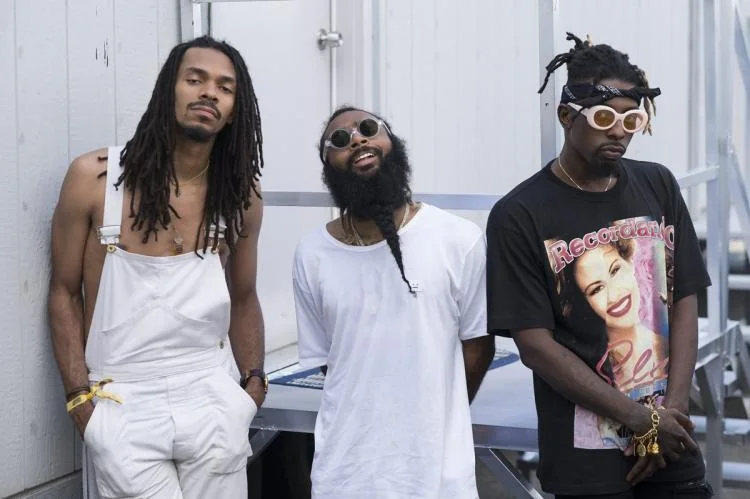
Brooklyn-based Rap trio Flatbush Zombies are back from the dead to deliver the visual for their killer new single “Headstone.”

Directed by the group’s longtime collaborator Luke Monaghan, the clip features the three weed-toking amigos in their stomping grounds of Flatbush, Brooklyn doing what they do best alongside close family and friends. The song will appear on FZ’s forthcoming album, Vacation In Hell, which is scheduled to release on April 6th.

Check out the cinematic music video below:

Meech, Erick and Juice will be taking their talents on the road this year as they’ll be playing Coachella and appear in their very own “See You In Hell ” North American tour. 

HeadstoneOfficialMusicVideoFRNDYLMRN1.jpg

Peep the tour dates above and head over to TheGloriousdead.com to cop your tickets!’

February 24, 2018 /Frendy Lemorin
Flatbush Zombies, Brooklyn, Rap, Madbury Club
Music
Comment
TheClermontTwinsFromBGCToYEEZYCW.jpg

The Clermont Twins: From BGC To YEEZY

February 24, 2018 by Frendy Lemorin in Contributing Writers

We have reached an era where social media has become one of the most prevalent platforms in the world. Individuals have gained the luxury to appoint themselves as models, musicians, bloggers, and even fashion designers simply based off their high number of Instagram followers.

Meet Shannon and Shannade Clermont, better known as ‘The Clermont Twins’. These ladies started from a different platform (reality television) but made sure to capitalize on their buzz. The electrifying siblings were introduced to the world on season 14 of Oxygen's Bad Girls Club, where audiences immediately took a liking to them for their “bad girl” attitude and edgy sense of style. Due to a physical incident that occurred during filming, the twins were asked by producers to pack their bags and leave the show. Fans were outraged when they found out that the twins were banned from the popular series.

Since their TV debut, the 23-year-old sisters have gained tons of opportunities, from not only their outlandish antics on BGC, but also their eyebrow-raising Instagram posts. They have gained a substantial amount of social media followers (including an Instagram follow from Kim Kardashian West herself), a clothing line, channeled their inner badass in Future's music video for his hit "Real Sisters," shot with controversial photographer Terry Richardson and even participated in Kanye West’s YEEZY season 6 Campaign. Yes, you heard that correctly. YEEZY.

TheClermontTwinsCW1.jpg
TheClermontTwinsCW2.jpg
TheClermontTwinsCW3.jpg
TheClermontTwinscw4.jpg
TheClermontTwinscw5.jpg

I think it's officially safe to say that these twins are only going up from here.

Written by Sir Julien George

February 24, 2018 /Frendy Lemorin
Sir Julien George, The Clermont Twins, Bad Girls Club, Oxygen Network, Sirrjulien
Contributing Writers
2 Comments
MoonlightMakeUpArtistDoniellaDavyCW.jpg

'Moonlight' Make Up Artist: Doniella Davy

February 24, 2018 by Frendy Lemorin in Contributing Writers

When Doniella Davy met with Moonlight director Barry Jenkins at the Ace Hotel in downtown LA he told her he wanted skin that would glisten.  “It’s in Miami,” he said.  “In the rain, in the sun, in the moonlight, on the beach, at night. I want them to glisten.”

The strength of Donni’s work is in its artistry and authenticity, so she assured him of two things; she would get real gold grills that wouldn’t look cheap or yellow, and she could make skin that would glisten.

Being a film makeup artist is a job that requires long hours and gets little recognition. But the visual art of makeup played no small role in the aesthetic that Moonlight received so much praise for; characters with incandescent skin, gold grills, and a drug-addicted mother shown to age over decades.

MoonlightCW1.jpg

Donni left the New York art world to become a makeup artist in 2012 and got her start in LA taking small gigs on Craigslist to build her portfolio. A former artist who studied photography at Pratt, she left her role at a high profile NY art gallery, after becoming disillusioned by the art scene, setting up fancy dinners for top names in the art world for openings attended by celebrities. She describes the downtown Manhattan art scene as more of a cool contest than a platform for talented people to have their art discovered. “I started thinking, WTF! is this dog and pony show?” she said.

So Donni switched coasts to pursue a career as a film makeup artist. After an apprenticeship with an established movie makeup artist, a small film on Craigslist lead her to her first feature film. Her artistry got her noticed by another producer, who recommended her to Jenkins.

At the start, no one knew that Moonlight would have its own place in the history of cinema. Donni loved the script from the minute she read it. It was a script about being black and gay and poor all in one movie. It was a script written with a sincerity that kept her up at night.

MoonlightCW2.png

In Miami, Donni arrived with customized blends of oils to make each actors skin glisten in just the right way.  “Barry noticed the difference between everything – things I didn’t even notice, like this one is a tiny bit brighter, this one gives a more diffused reflection, this one is sharper,” she states.

They didn’t want the characters to look like they had all been dipped in the same product, factory style.

She used everything from rosehip oil, to grape seed oil to achieve different effects for different actors.  “For the kids, I used baby oil and they loved it, but if I were to put that on adults, they’d be like, are you putting Johnson and Johnson on my face?” admits Donni.

When it came to the grills, Donni tracked down Dr. Kelly Gold Grillz in Miami, a hole in the wall in an open aired plaza. While waiting in what looked like a dentist office, three loud and boisterous dudes rolled in. One of them grabbed her phone out of her hand, put his number in it, and told her, “Here’s my number in case you wanna get into some trouble tonight—or in case you get into trouble and need your ass saved.”

When they opened their mouths, they all had grills. She knew she was in the right place.

Donni had to ship a mold to actor Trevante Rhodes in New York, where he molded his teeth, and mailed it back to her. Donni was instructed by Dr. Kelly to bring the completed mold back to a man named Jesus. At $700, the grill took up more than half the makeup budget for the entire film.

“Jesus told me, ‘The price is the price. You can get cheaper gold but it will look more yellow’ And I thought— no way. If this character is drug dealing and doing good – he’s going to get gold.”  

Refusing to sacrifice authenticity, Donni met Jesus off the Miami highway at exit 17a to pick up the completed grill.

MoonlightCW3.jpg

Undoubtedly one of the most amazing feats Donni accomplished was aging the character Paula, Chiron’s mom (Naomie Harris), who is progressively getting into drugs— without giving her a theatrical look.  In the duration of the film she ages 10 years, and then 10 more.

Donni used teeth stains made from watercolor gels. She created subtle changes that weren’t drastic or overly dramatic. In the second decade of deterioration from drug abuse, Harris looks similar to how she looked in earlier scenes, but when the camera zooms in, the changes become apparent.  Harris’ character, Paula, was based on Jenkins’ mom. Donni wondered if the real Paula would be watching the film one day.

“It’s not like you see this scary thing when the camera hits her – it’s all about realism. I wanted to be empathetic,” Donni said.

She didn’t want her to look too scary, or be covered in scabs.

 “At the end of the day, I’m portraying a mother— not a monster.”

Harris’ entire role was filmed in three days during her break from the Bond movie press tour. After knowing Donni for only 30 seconds, Harris sat down and told her “You can do whatever you have planned. I completely trust in you.”

With that level of trust, Donni was able take risks, make mistakes and fix them. That is the kind of collaborative experience that Donni loves in the work that she does.  And as a result, the visual effect speaks for itself.

MoonlightCW4.png

The job Donni does is not easy. Unlike many celebrity makeup artists who pave stealthy careers for themselves staying close to the red carpet, avoiding rough terrain and faraway journeys, Donni chose to become a makeup artist because she wanted to tell powerful stories.

During the fight scene, the crew barely blinked or breathed as they watched the blood spill from Chiron’s mouth. Barry cut the scene and started again. After the second punch, Chiron (Ashton Sanders) swooped down and met Donni outside the frame, where she reloaded his mouth with watery blood.

MoonlightCW5.png

Donnie explored the set medic’s kit and used butterfly band-aids and a tiny ball of gauze. This created the look of a last minute first aid treatment, such as an unprepared high school principal might do. As Chiron was interrogated by the principal his silence turned to mumbles and stifled sobs, and the tiny ball of gauze began to slide further and further out of his nostril.

Donni loves these moments, when the makeup takes on a life of its own. Other makeup artists might have made sure the cotton stayed in place, but Donni let it become a part of the story, as it slowly slid all the way out. The crew was dead silent watching the scene on the monitor. Some were looking down and some had watery eyes.

“This is live-storytelling,” says Donni, “Moments like that are what I keep showing up for.”

Written by Elle Silver

Photographs provided by Doniella Davy & Will Richter

February 24, 2018 /Frendy Lemorin
Elle Silver, Moonlight, Doniella Davy, Barry Jenkins
Contributing Writers
Comment
BalenciagaPosterBoyFrendyOriginals.jpg

Balenciaga Poster Boy

February 24, 2018 by Frendy Lemorin in Original Stories

The name Amadou Wane may not ring any bells; nevertheless, I’m pretty sure his face looks familiar to true fashion heads worldwide—especially Balenciaga lovers. 

The 26-year-old burgeoning model made his debut strut down the catwalk in grandiose manner as he closed the Demna Gvasalia-helmed brand’s Autumn/winter 2017 menswear show, sporting an oversized scarf inspired by Bernie Sanders’ presidential campaign logo.  Since then, Amadou has furthered his working relationship with the #1 ranked luxury line by appearing in various campaigns, and even graced the runway once more for its Spring/summer 2018 men’s collection.

Recently, my dear friend Elisabeth Hadida tagged the Senegalese model under one of my Instagram posts.  Since Elisabeth knew Amadou personally—after all, she is Balenciaga’s Europe senior buying manager—I decided to connect with him as well. I appreciated Wane’s levelheaded demeanor despite his speedy success in the modeling world so I decided to extend our dialogue on my #FrendyOriginals platform. This way, we’ll all be able to gain more insight into the life of the Balenciaga poster boy.

Check out our conversation below:

FRENDY: What’s going on Amadou? I appreciate you for taking the time to speak with me.  Is this your very first interview?

AMADOU: Thank you for the opportunity! Yes, this is my very first interview and I’m extremely grateful for it—I hope it will not be my last * Laughs *.

FRENDY: I’m sure it’s not going to be your last * Laughs *. How do you feel knowing that the luxury brand you’ve been consistently working with is #1 in the world?

AMADOU: It’s an honor to work with the cream of the crop in the fashion world.  At first, I did not realize how big the brand was. It’s crazy to see the mass hysteria that Balenciaga has caused.

BalenciagaPosterboyFrendyOriginals1.jpg

FRENDY: Well, now you know! Were you always interested in modeling since your days back home in Dakar?

AMADOU: Honestly, I was a fashion addict, and knew all about the latest trends.  But I never thought of working in the business as a model.  Much love to my fellow model friend Lucas, Eva Goedel (the founder of my modeling agency Tomorrow Is Another Day), and everyone else on the team who propelled my modeling career.

FRENDY: At what age did you move from your home country to France? And Why?

AMADOU:   I left Senegal for France at the age of 22 to continue my studies. I spent two years in Metz before moving to Paris.

FRENDY: How was life growing up in Senegal?

AMADOU: Life over there is totally different from France * Laughs *. You know, Senegal is known as “The Land of Teranga,” meaning it is the country of hospitality, filled with a real sense of human connection.  But beyond the social aspect, the weather in Senegal is amazing!

BalenciagaPosterBoyFrendyOriginals2.jpg

FRENDY:  You left Senegal in order to continue your studies.  Which school did you attend there? What exactly were you studying?

AMADOU:  After receiving my Bachelors, I attended the Polytechnic School of Dakar, where I obtained a degree in Telecommunications.  Then, I got a degree in Telecommunications at The University of Lorraine. I now have a Masters in Engineering in System and Network Engineering from Institut-F2I in Paris.

FRENDY: Wow, that’s spectacular. You must have been hitting the books hard! What set of events occurred that led you to become a model?

AMADOU: I was scouted on the streets of Paris! Lucas, who is a model and scout from TIAD (Tomorrow Is Another Day) modeling agency, spotted me while I was shopping.  He informed me about the agency and at first I was not attentive. Not too long after our first encounter, he convinced me to do it.

FRENDY: Everything happens for a reason. How did Lucas convince you to finally join TIAD?  What did he tell you?

AMADOU: He explained to me the role of the agency and the big names that they’ve worked with.  Plus, he told me about the amount of money I would be earning * Laughs *.

BalenciagaPosterBoyFrendyOriginals3.jpg

FRENDY: * Laughs * I don’t blame you at all for rolling with them. It’s pretty incredible that your very first modeling gig was to close Balenciaga’s A/W 2017 runway show. Were you nervous?

AMADOU: To be honest, no—It’s not in my nature to be nervous. I was just extremely hot because I had a huge coat and the Bernie Sanders’ scarf on. The security guards had to open up a backdoor so I could breath before walking on the runway * Laughs *.

FRENDY: * Laughs *Yeah your outfit was pretty fire (pun intended). How did you prepare for your first walk?

AMADOU: The agency trained me to walk properly. Thank God for them! But also every model has a unique way of walking and that’s what makes the difference.  It’s the stylist choice to change the model’s walk or not depending on the mood.

FRENDY: I saw that you also walked for Vetements’ A/W 2017 fashion show.  Have you met Demna?

AMADOU: Yes, of course. It is Demna who validates our looks before walking.  The craziest thing about it all is that he is the nicest guy!   He takes the time to joke around and connect with us.

BalenciagaPosterBoyFrendyOriginals5.jpg

FRENDY: Elisabeth told me great things about him as well.  What other brands have you modeled for?

AMADOU: Elisabeth! I love her * Laughs *.  I also had the pleasure to work with Abasi Rosborough for LVMH prize, and I recently walked for Vivienne Westwood.

FRENDY:  You've already worked with some of the best luxury brands in your short modeling career.  Are you interested in doing anything else in the fashion field?

AMADOU: Compared to other models I have not done anything yet * Laughs *.   But I’m very thankful for the opportunities thus far.  In relation to the question, I would like to organize a high-level fashion week in Dakar. I’m doing my best to make this happen. There are tons of Senegalese models out there, so we might as well band together to do something amazing for our beloved country.

FRENDY: Is it safe to say that your dreams of becoming an engineer are out the window?

AMADOU: Nope.  My number one priority is my education, but that doesn’t mean I’ll stop modeling. I’m doing my best to do both. I won’t be able to model all of my life so it’s good to be skillful at other things.

February 24, 2018 /Frendy Lemorin
Balenciaga, Paris, Fashion, Elisabeth Hadida, Vetements, Demna Gvasalia
Original Stories
1 Comment
GuccistigerheadwatchFRNDYLMRN.JPG

Gucci's Tiger Head Watch

February 24, 2018 by Frendy Lemorin in Fashion

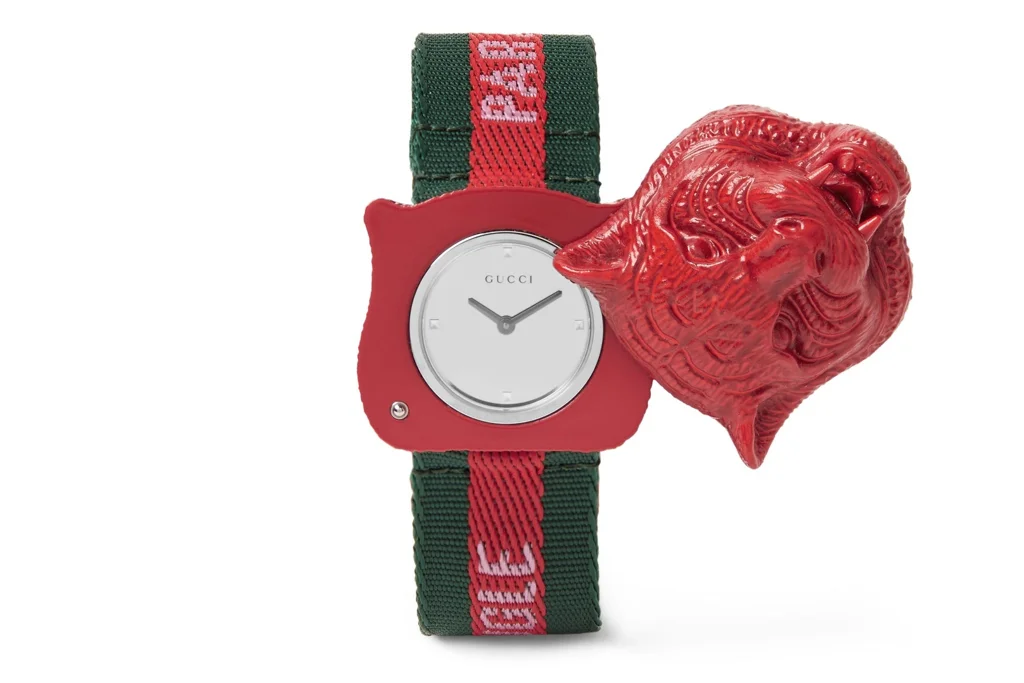
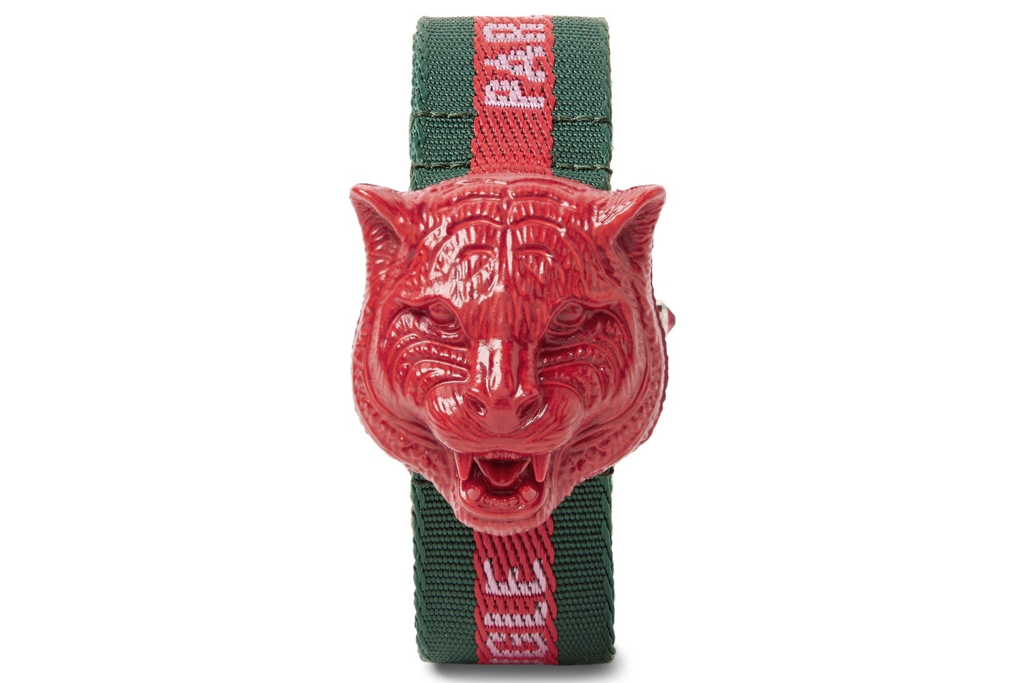
The photo above looks like a swagged-out version of the infamous “Arthur fist” meme, but in all actuality is an ad for Gucci’s new tiger’s head resin & grosgrain watch.  Although the clenched-fist model wearing the Swiss-made time piece isn’t “frustrated” as the loveable cartoon character, you (the consumer) might be infuriated after finding out the cost of the McDonald's happy meal looking watch.

GuccisTigerHeadWatchFRNDYLMRN1.jpg

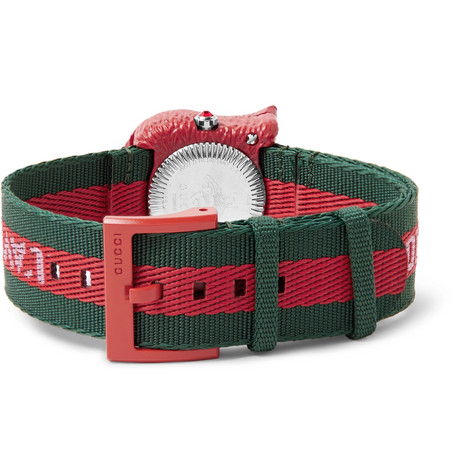
Alessandro Michele's latest accessory, priced at $790, features a red resin-coated brass tiger's head that swivels outward to disclose a clean mirrored face.  Furthermore, the watch has a durable red and green grosgrain strap marked with Gucci's slogan, "L'Aveugle Par Amour."

Click the gallery below:

GuccisTigerHeadWatchFRNDYLMRN2.JPG
GuccisTigerHeadWatchFRNDYLMRN3.JPG
GuccisTigerHeadWatchFRNDYLMRN4.JPG

Not balling on a budget? Then, this piece was made for you!  Cop yours at select retailers and MR PORTER.

February 24, 2018 /Frendy Lemorin
Gucci, Tiger Head Watch, Alessandro Michele
Fashion
Comment
JordanBrandxLevisCollection.jpg

Jordan Brand x Levi’s® Collection

February 24, 2018 by Frendy Lemorin in Fashion

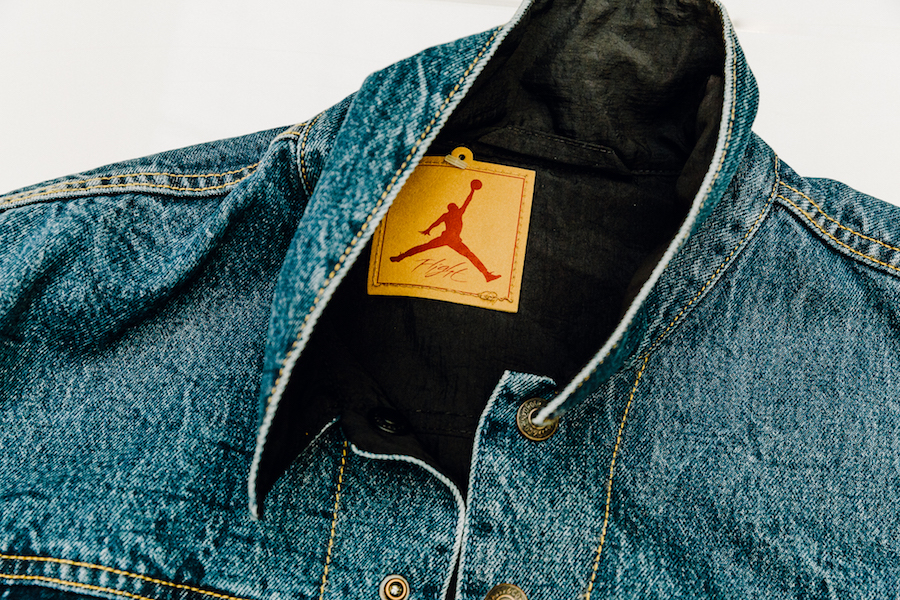
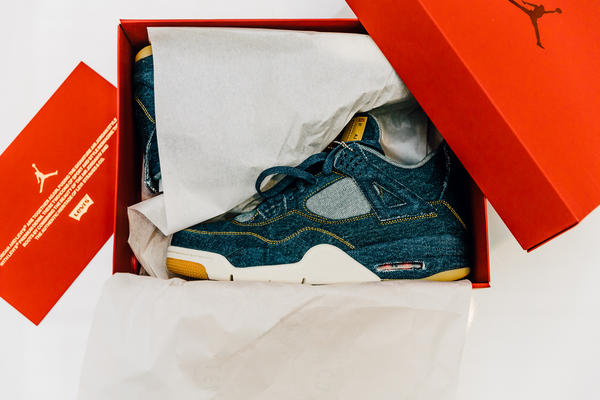
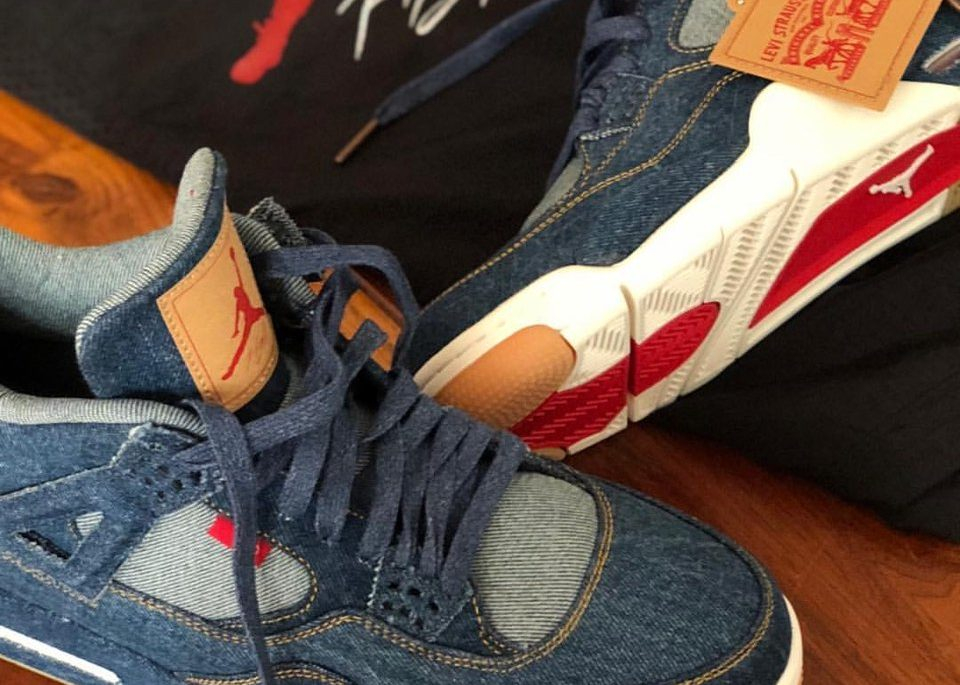
Jordan Brand and Levi’s® have joined forces to make the ultimate everyday wear collection, which consists of the Air Jordan IV and Levi Strauss & Co. denim trucker jacket.

I first saw these joints on Travis Scott via his Instagram story and initially thought that it was yet another sneaker collaboration he had in the works.  I’m not too fond of being dipped in denim, but I wouldn’t mind rocking the pieces on separate occasions.

JordanBrandxLevisCollectionCW1.jpg
JordanBrandxLevisCollectionCW2.jpg

The Jordan Reversible Trucker Jacket features worn wash denim, red flight suit material (located at the underarm panels) and a lightly ditressed flight logo on the back. When reversed, a black flight suit with a denim accent is revealed with a Jumpman flight logo on the back.

JordanBrandxLevisCollectionCW3.jpg
JordanBrandxLevisCollectionCW4.jpg

The Jordan Brand x Levi's® Air Jordan IV and Jordan Reversible Trucker Jacket is scheduled to release on January 17th.  Check out the participating retailers below:

Both the Air Jordan IV and Trucker Jacket release at:

  • BOTTEGA BACK DOOR- Bologna

  • CONCEPTS- Boston and New York City

  • DOE- Shanghai

  • END CLOTHING- Newcastle

  • INVINCIBLE- Taiwan

  • JORDAN BASTILLE- Paris

  • KICKZ- Berlin

  • KINETICS (TOKYO 23)- Shibuya-ku, Tokyo

  • LEVI’S STORE HARAJUKU- Tokyo

  • LEVI’S- San Francisco (Market St.) and New York City Soho

  • LEVI’S BERLIN KURFUERSTENDAMM- Berlin

  • LEVI’S LONDON REGENT STREET 174- London

  • LEVI’S OSAKA FLAGSHIP- Osaka

  • LEVI’S PARIS CHAMPS ELYSEES- Paris

  • LEVI’S SH Nanjing WEST RD- Shanghai

  • LIVESTOCK- Toronto

  • OPIUM- Paris

  • OQUIM- Amsterdam

  • SHINZO- Paris

  • SHOE GALLERY- Miami

  • SI VAS DESCALZO- Barcelona

  • SNEAKRS N STUFF- London

  • SOLE FLY- Miami

  • SPORTS LAB- Osaka

  • SPORTS LAB- Shinjuku, Tokyo

  • UBIQ- Philadelphia

  • UNDEFEATED- Los Angeles

The following retailers will carry only the Air Jordan IV: 

  • 8 WELLINGTON- Hong Kong

  • 21 Lab- New York City

  • 32 SO STATE ST- Chicago

  • 290 SQM- Turkey

  • A MA MANIERE- Atlanta

  • BODEGA- Boston

  • CAPSULE- Toronto

  • CONCEPTS INTERNATIONAL - Dubai

  • CRÈME- Norfolk (VA)

  • DEAL- Beijing

  • FEATURE- Las Vegas

  • FOOT PATROL- London

  • JORDAN L1 HONGXING- Chengdu, Hongxing

  • JORDAN 16 SONGGAO- Taipei

  • JORDAN 139 NAN DONG- Shanghai

  • JORDAN BEIJING THE PLACE- Beijing

  • JORDAN GUANGZHOU 218 TIANHE- Guangzhou

  • JORDAN HONGDAE - Seoul

  • JORDAN NANJING- Tinajing

  • JORDAN TAIPEI XIMENTING- Taipei

  • JORDAN TIANJIN - Tianjing

  • KITH- New York City (SoHo)

  • LMTD EDITIONS- Barcelona

  • LUST- MEXICO CITY

  • ONENESS- Lexington

  • OVERKILL- Berlin

  • PATTA- Amsterdam

  • POLITICS- Lafayette (LA)

  • RSVP GALLERY- Chicago

  • SI VAS DESCALZO- Barcelona

  • SOCIAL STATUS- Charlotte, Houston, Pittsburgh

  • ST ALFREDS- Chicago

  • SUPPLY- SYDNEY

  • THE DARKSIDE INITIATIVE- San Francisco

  • TITAN- Fort, Manila

  • TITOLO- Zurich

  • TROPHY ROOM- Disney Springs

  • WISH- Atlanta

  • WZK- Shanghai

  • XH55- Guangzhou

  • XHIBITION- Cleveland

  • YAXIN- Beijing

February 24, 2018 /Frendy Lemorin
Jordan Brand, Levi's, Basketball
Fashion
Comment
KareemsPickRaveenaCW.jpg

Kareem's Pick: Raveena

February 24, 2018 by Frendy Lemorin in Contributing Writers

Raveena Aurora, better known as Raveena, is a 25-year-old singer/songwriter based in New York.  The Indian-American goddess' voice is sweet and light like the smell of honey suckle.

"If Only," found on Raveena's Shanti EP, is a song that explores the mind of someone who has clocked out physically, mentally and emotionally from a relationship.  Furthermore, it also discusses the perspective of the counterpart in the failed union.  The one that ran away is now making an effort to be available for the partner who's already moved on.

Check out the single below:

Produced & Mixed by Everett Orr Lyrics by Raveena Bass: Aaron Liao Rhodes/Guitar: Cale Hawkins

Written by Kareem Hilaire

February 24, 2018 /Frendy Lemorin
Kareem's Pick, Raveena, Music
Contributing Writers
Comment
KAreemsPickJaduHeart.jpg

Kareem's Pick: Jadu Heart

February 24, 2018 by Frendy Lemorin in Contributing Writers

The mysterious duo named Jadu Heart consists of two musicians named Dina and Faro. They are signed to Mura Masa’s label Anchor Point Records.

The artists, who have seemed to start buzzing as of last year, are seriously releasing interesting content. The group's sound is indefinable—one thing that remains true, though, is that their tunes are dope!

Check out the visual to Jadu Heart's latest single, "U Never Call Me," featuring Mura Masa himself down below:

Written by Kareem Hilaire

February 24, 2018 /Frendy Lemorin
Kareem's Pick, Jadu Heart, Music
Contributing Writers
Comment
JustinsVisionFrendyOriginals.jpg

Justin's Vision

February 24, 2018 by Frendy Lemorin in Original Stories

I was fortunate enough to become friends with the exceptional photographer Justin Amoafo, right before his ascension into elite lensman status. Justin was only 15-years-old when we initially met, but his tremendously poised demeanor and go-getter mentality positioned him light years ahead of his peers.

Born and raised in Queens, New York by Ghanaian parents, the multi-talented visionary was instilled with an immense value for education.  As a matter of fact, at the age of 11 Justin suggested that he should attend boarding school. “I was always an outcast and wanted to expand my horizons, experience a new environment,” says Amoafo. With his parent’s approval and a lucrative scholarship, the young adventurer was enrolled at the prestigious Eagle Brook in Western Massachusetts. 

Justin was one of only six black kids in the entire institution but the statistic didn’t cast a shadow of fear on his pursuit of enlightenment. Amoafo was so in awe with the refreshing scenery at his new abode, he decided to freeze it all in time.  Using his roommate’s state-of-the-art camera, Justin began to take pictures of the beautiful landscape surrounding Eagle Brook.  Since then, photography instantly became Amoafo’s primary focus. He started posting photos on Flickr, which ultimately led him to gain fans across the world.

Immediately following boarding school, Justin attended Brooklyn Tech HS with an increased passion for snapping.  After a year of saving up lunch money, the bright-eyed shutterbug was able to purchase his very first camera, the Canon t2i. Mastering the art of Flickr, Amoafo leveled up to Tumblr, where he garnered even more admirers.

JustinsVisionFrendyOriginals1.jpg

Justin is currently attending NYU Shanghai with a major in Interactive Media arts and Business, but that isn’t stopping him one bit from putting work in behind the lens.

FRENDY: What compelled you to study abroad after high school?

JUSTIN: As a kid, I always dreamt of traveling the world. After a summer abroad in high school, I made it my business to take advantage of every opportunity to see a new place. Naturally, I had to pursue college options outside of the USA.

FRENDY: Is it difficult for you to find a balance between schoolwork and photography?  Are you able to find steady shooting gigs in Shanghai?

JUSTIN:  One of the most difficult things for humans in general is maintaining a balance. Whenever you find yourself in that comfortable place, life switches up your situation. Thankfully, my major at school and my real life career/hobbies are intertwined, so usually it’s not too difficult.

Work in Shanghai has been steady, thankfully. People here show a lot of love. When they see you doing great work, they’ll always go out of their way to help you get gigs. As usual, staying hungry & seeking out opportunities is also a great way to close gigs.

JustinsVisionFrendyOriginals2.jpg

FRENDY: You’re one of my favorite people to follow on Snapchat due the display of your worldly adventures. Are your travels for leisure or work?

JUSTIN: Both. Living internationally already makes it much easier to pick up clients that require me to travel or have an opportunity abroad. I’m always itching to travel regardless, so most of my free weekends and ‘vacations’ are spent visiting a new city.

FRENDY: How did the relationship with your muse Sira P Kante come about?

JUSTIN: *Laughs* She’s definitely my muse. A modern day Naomi Campbell.  Sira and I met through one of my good friends. We met up for a test shoot one day in Summer 2016 and the rest is history.

JustinsVisionFrendyOriginals3.jpg

FRENDY: I admire your effortless ability to network with the industry’s finest. I noticed that you’ve been shooting superstar musicians and promising actors who are from the motherland. What set of events lead to such astounding opportunities?

JUSTIN: Every connection I’ve made, both business & personal has been organic. I never force relationships, but I’m definitely not above a cold email or intro. That being said, the world is smaller than we all think. It’s so often you want to work with someone and a friend (or friend of a friend) can make the connection for you. Organic networking is the best, especially when you’re already social.

JustinsVisionFrendyOriginals4.jpg

FRENDY: What are the top 3 pictures you’ve ever taken?

JUSTIN: I don’t think I have 3 strict top favorites but here are some that I like:

JustinsvisionFrendyOriginals5.jpg
JustinsVisionFrendyOriginals6.jpg
JustinsVisionFrendyoriginals7.jpg

FRENDY: Are you planning to take your creative talents into new heights?

JUSTIN: I’m always striving to be my best self. Photography is one of my passions, but by no means is it my only means of expression. I am working on expressing myself fully, with no filters or limitations. We’re in the era of the multidimensional artist and I think that’s so great. Everyone should be able to create with no filter.

February 24, 2018 /Frendy Lemorin
Justin Amoafo, New York City, NYU Shanghai, Photography
Original Stories
Comment
BruceWeberSexLiesandNightmaresCW.JPG

Bruce Weber: Sex, Lies and Nightmares

February 24, 2018 by Frendy Lemorin in Contributing Writers

Sometime around the year 2000, when I was still in elementary school, I remember walking through my older cousin’s bedroom which was, as is the case with many teenagers, adorned with posters. There was one fixed with pseudo discretion right next to the entryway so that it became partially obscured when the door swung open. It had a vertical orientation with the ephemeral, grainy resolution of film that made its date difficult to pinpoint. In it, a young naked woman with flaxen hair, made luminous by the sun, strolled through a field of wild vegetation in relaxed bliss, a smile spreading across her face. It was Abercrombie & Fitch’s heyday, and I’d grown accustomed to this kind of imagery streaked across shopping bags toted around the mall. I recognized instantly this photograph was related though by what means I didn’t know. It was only later that I learned what connected them was Bruce Weber.

 Weber, 71, is one of the world’s leading photographers who has garnered particular acclaim for his work in glossy publications. He has lensed so many iconic ad campaigns, editorials and personal book projects I doubt even he keeps track. Weber has long been the subject of rumors about what has or has not happened on his exclusive sets, but being the power player that he is, nothing has seemed to stick with any serious consequences. Until now.  A bevy of current and former models, numbering no fewer than 15, who at one time worked with Weber have come forward—first in individual Instagram posts, and now in a damning New York Times exposé that accuses both Weber and fellow fashion titan Mario Testino of gross abuses of authority. I could most definitely make this piece an examination of them both, but, for now, my focus lies squarely on Weber. Though the accusations that have come to light are truly horrific, Weber has always been a problematic figure and whatever the outcome may be, it is long past time for fashion to move on without him. 

BruceWeberSexLiesandNightmaresCW1.PNG

A couple of months ago, the men’s fashion magazine VMan promoted a 2018 calendar on social media which featured a different male model for each respective month, all with the chiseled bone structure and sinewy abdominal wall found throughout Weber’s portfolio. The images were indeed beautiful and I instantly messaged one to a good friend who also happens to be a photographer. I mentioned to her how incredible all the men looked, but qualified that I was conflicted having never decided definitively if I thought Weber was exploitative. “I think he is creepy, but talented,” she replied. “Creepy only because he seems like a dirty old man.” She also mentioned apprehension at his glass closet image. I couldn’t help but agree with both points. Despite being married to his agent and studio manager Nan Bush, his homoerotic imagery and apparent intimate detachment from Bush have always led most observers to conclude that their union was one strictly of business. The stories now trickling forth seem to bear that out.

Among other things, Weber is accused of forcibly touching male models using his infamous ‘breathing technique’ whereby he leads a subject through exercises in a supposed attempt to relax them enough to take an astonishing picture. However, from what has been reported in the Times and confirmed by several models independently, this procedure often involved Weber guiding a model’s hands to their genitals as he stood uncomfortably close, sometimes with his fingers in their mouths, and even resulted in forced masturbation in some instances. Those who didn’t comply or were visibly uncomfortable were never contacted for work again, usually killing their career just as it began.

BruceWeberSexLiesandNightmaresCW2.jpg

To learn that Weber had a ‘casting couch’ process of sorts didn’t surprise me as the public has become only too aware of these sinister methods as employed by the likes of Harvey Weinstein. These disturbing accounts of Weber using his position to force nudity and unwanted sex acts on those who posed for him both angered me as a human and as a person in the same field. I’ve spent time on sets as a stylist’s assistant helping dress models for shoots, but I always made doubly sure to keep my gaze where it belonged, worked as quickly as possible, touched only when and where absolutely necessary to do the work and maintained conversation to gauge their level of comfort. From what was reported by numerous men, Weber often asked his subjects to strip for ‘test shoots’ in small quarters and made advances while no one else was present. The truth is, that kind of excessive nudity is totally unnecessary even for assignments that require someone to disrobe. As model Jason Fedele astutely said in the Times article, “...If you do get the job, the majority of the time you’re not naked and you’re not in a swimsuit. So what’s really happening is that these guys are gauging whether you’re open or shy or close-minded or, quite frankly, whether you’re gay or hetero and willing either to flirt with them or to submit to an advance.” The youth and inexperience of his alleged victims only made them more susceptible to this manipulative behavior.

For generations of people, Weber’s work has come to embody sex. He took the carefree lightness of 20th century Health Photography, which depicted active people relishing the outdoors and imbued it with an eroticism that shaped how people engaged with everything from Calvin Klein to Ralph Lauren toBanana Republic. As a gay man, I always had an appreciation for these kinds of photographs. They were unabashed in their sexuality and dared you to look with unblinking eyes. I found the featured men adonis-like, and Weber’s eye captured intangible details specific to the gay point of view that appealed to the voyeur lurking in everyone. But even before I heard the rumors, they gave me pause. There was something too invasive and undue about much of what he produced. He wasn’t like George Platt Lynes exploring his own sexuality and giving a face to gay men or even Picasso distorting women in an attempt to physicalize his tumultuous romances with lovers while eradicating traditional form. No matter how wonderfully composed his nude photographs were, elements were amiss and the patterns of predation described with striking similarity by so many buttress my worst assumptions. 

BruceWeberSexLiesandNightmaresCW3.jpg

That same VMan calendar that kicked off my renewed processing of Weber’s oeuvre highlighted another issue the fashion industry has seemed content to ignore. It caused more than a little internet chatter when viewers quickly recognized that of the 12 models featured, all were white or, at the very least, so fairly complected that no one who didn’t know them personally would be able to tell otherwise. One Instagram commenter quipped, “Even the dogs are white,” in reference to the Golden Retriever puppies that populated a group shot.  This project—like the poster I remember from years ago, nearly all of his fashion editorials, monographs and advertising—featured people sharply limited in demographics. Yes, Weber has included people of varying backgrounds in the past, but often only when the subject matter or location absolutely demanded it. His vision has become synonymous with the fantasy of America and Americana yet the danger lies in his unwillingness to showcase the people of color who contribute to its social fabric. Other legendary photographers of the past with sexually charged styles, such as Herb Ritts and Robert Mapplethorpe, regularly used models of color and appreciated their beauty along with the different compositions those models allowed them to craft. When fashion claims a need to diversify its ranks, why continue working with someone who so stubbornly refuses to be a part of the solution? 

BruceWeberSexLiesandNightmaresCW4.JPG

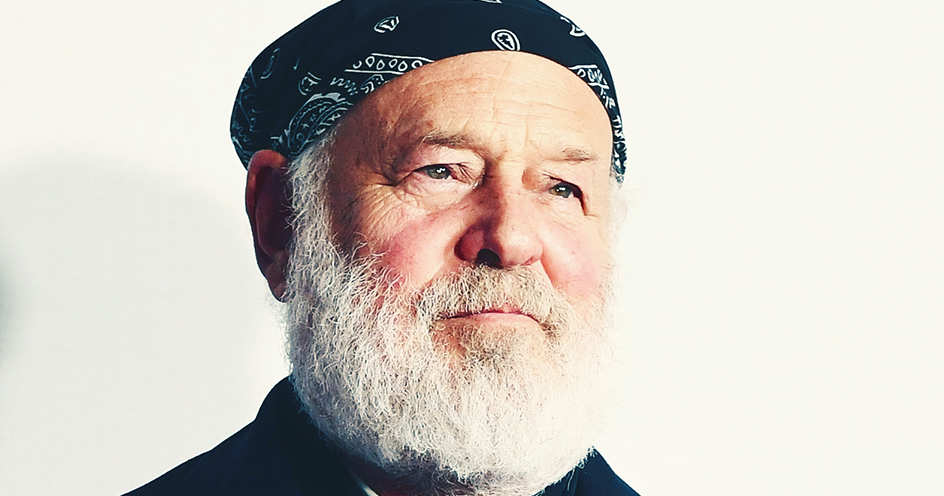
Many have come to Weber’s defense in recent days citing phenomenal experiences and trusting relationships. I’m sure those people have nothing but good memories. But those statements of support do not and cannot invalidate the stories already amassed, the count of which I’m positive will grow in the coming weeks. Bruce Weber may appear like everyone’s imagined hippy grandfather swathed in billowing scarves and gauzy bandanas that cover his Santa-like white hair, but that doesn’t mean he’s incapable of being the proverbial wolf in sheep’s clothing. I believe the men who have come forward and it’s time for a business that casually doles out abuse with a wink and a that’s-just-the-way-we-do-things attitude to do the same.

Written by Martin Lerma

February 24, 2018 /Frendy Lemorin
Martin Lerma, Photography, Bruce Weber
Contributing Writers
1 Comment
KareemspickkelelaCW.jpg

Kareem's Pick: Kelela

February 24, 2018 by Frendy Lemorin in Contributing Writers

Kelela is an Ethiopian-American songbird that is worth listening to.

“Blue Light,” is a song from her debut studio album, Take Me Apart, which was released on October 6th, 2017. The tune entangles the listener in Kelela's experience with freeing herself from a past lover. From the afro-futuristic visuals to the sensual production, "Blue Light" is a piece of art that all should be blessed to experience.

Check out the video below:

Written by Kareem Hilaire

February 24, 2018 /Frendy Lemorin
Kareem's Pick, Kelela, Music
Contributing Writers
Comment
KareemsPickJessieReyezCW.jpg

Kareem's Pick: Jessie Reyez

February 24, 2018 by Frendy Lemorin in Contributing Writers

Hey! It's your boy Kareem Hilaire and I'm back again to showcase artists of the now who are starting their own wave in the music industry.  

Jessie Reyez is a multi-talented singer from Toronto who released her debut EP, Kiddo, earlier this year  in April.  "Gatekeeper," is a stand out track from the colombian crooner's project that highlights the topics of sexual abuse and misogyny in the entertainment industry. 

check it out below:

Jessie Reyez on tour now. Tickets available here: http://jessiereyez.com/

Written by Kareem Hilaire

February 24, 2018 /Frendy Lemorin
Kareem's Pick, Jessie Reyez, Music
Contributing Writers
Comment
TheSilentShooterFrendyOriginals.jpeg

The Silent Shooter

February 24, 2018 by Frendy Lemorin in Original Stories

Timothy Smith is a man of few words, but he has a sh*t load of captivating flicks to make up for it. Like most of my creative comrades, the Brooklyn bred lensman and I met at BAPE NYC - where we hardly spoke, yet had great mutual respect for each other.

I haven’t seen Timothy in about five years, so it was a pleasant surprise when he followed me on Instagram last month.  What shocked me even further were the glorious editorial shots featured on his feed, which he photographed himself. I am not in any way, shape or form attempting to downplay Tim’s artistic prowess, but I was Stacey Dash clueless about his exceptional photography skills.  As I mentioned earlier, we never had a conversation that lasted more than one minute - let alone discussed his interest in the visual arts.

This Original Stories series has provided me with the perfect opportunity to have a sitdown with the silent shooter to find out more about his background, passion for picture taking and path to success in the photography industry. Check out our dialogue below:

FRENDY:  It’s a pleasure to finally have a thorough convo with you after all these years *Laughs*. Why didn’t you tell me about your love for photography back in my early BAPE days?

TIM:  I was in my early stages, still insecure about my work. Not very confident in showing my work to others, and also still finding my voice. Like, all of my early work was of cats, street style, carts, landscapes *Laughs*. I was all over the place.

TheSilentShooterFrendyOriginals1.jpg

FRENDY:  I respect that, you’re excused *Laughs*. Where were you raised in Brooklyn?

TIM:  I grew up in the East Flatbush/Brownsville area. At the age of 11/12, my grandparents lost our house so I moved over to Queens to live with relatives for a while. When I first moved to Queens I stayed in Ozone park in my great uncle’s basement, then bounced around from Laurelton to South Ozone Park, then eventually landed back in Brooklyn.

FRENDY:  Crazy.  I lived in East Flatbush for most of my life as well.  Which schools did you attend growing up in Brooklyn and Queens?

TIM:  Yeah, it’s funny, you used to actually go to the gym with one of my best friends from childhood over in the BRC I think? I know you guys used to work out together, but I can’t remember where. Well, I will say this, I was fortunate enough to go to “good” schools. I attended Saint Catherine of Genoa in Brooklyn, then I finished my 8th grade year in Saint Teresa in Queens. For high school, I attended Christ the King over in Middle Village.

FRENDY:  Damn, it’s really a small world. Ok nice, those are definitely great schools to attend.  Were you always into photography growing up?

TIM:  *Laughs* Yeah, real small world. My grandparents made it a priority to send me to catholic schools because they believed it was much safer and a better education. I remember not having any lights or heat because my grandparents would have to pay 4 months of back owed tuition, because they truly believed I could do something when I got older.

Funny thing is I always wanted to be a photographer because of Spider-Man! I used to think Peter Parker was f*cking amazing. I used to get all my Spider-Man toys and create “movies” with cereal boxes as video cameras *Laughs*. Cornflakes boxes to be exact!  It wasn’t until my grandmother passed that I really thought about taking photography seriously. I literally spent my student refund check in 2012/2013 to buy a canon 7D, to actually shoot short films, and record myself reviewing video games.

TheSilentShooterFrendyOriginals2.png

One day I took a photo and all of the feels of being Spider-Man came back to me all at once. So I decided to sell my car to fund my photography addiction, I took an internship back home the summer before I graduated at Management Artist in Chelsea. It was legit the best experience of my life being around all that amazing photo work, it trained my eye very quickly to distinguish good photography from bad photography. It was an amazing summer, I slept on a living floor the entire time and enjoyed everyday of it!  

FRENDY:  Which college did you attend after Christ The King?

TIM:  I attended Saint John's University for one semester, then got kicked out because they didn’t believe my financial situation, regarding to financial aid. So pretty much even with a partial scholarship I couldn’t afford it. Then I took some time off and went to Nassau. After a while, I decided I had to leave because if not I would have gotten in so much trouble and other dumb shit.

So then I went to a small HBCU in North Carolina: ECSU and got my Bachelors. After getting my degree, I came back to Canarsie because my mom ended up getting breast cancer and I wanted to help out the best way I can, and to build a relationship between us. After that, I finally got home and applied to grad school for photography and ended up attending School of Visual Arts in NYC.

FRENDY:  Wow. First off, is your mom alright now?  Also, what kind of trouble would you have gotten yourself into at Nassau? I don’t see you as a troublemaker.

TIM:  Oh yeah, she’s fine now! Thanks for asking. Not really me getting in trouble at Nassau, it was more so I was still hanging around all my friends that always did dumb sh*t. Like I’ve never been a tough guy or whatever, but I’m also a very loyal friend, plus my house was always the hub for all my friends. So I just remember one day playing call of duty and looking around at what my friends we’re doing and was like “bro, I gotta go.” It’s all good though, they always said I shouldn't be about that ‘life’ and they respected my decision.

I would like to give a special thanks to one of my best friends/brother, Fred because when he saw I was serious about photography he gave me a f*cking brand new 5D mark II with flashes and lenses. Like, that's the type of bond me and my friends have - I'm still trying to figure out a good gift for him *Laughs*.

FRENDY:  That’s the definition of true friendship right there. Were you studying photography when you were schooling in NC? Or you started taking photography classes while attending SVA in the city?

TIM:  SVA.  I did a broadcasting class in NC and tried to get funding for a short film, but it never worked out *Laughs*. I did have three extremely amazing teachers; Professor Bright, Professor Washington, and Latoya Monique. They definitely helped me shape my creative vision by giving me the freedom to experiment as much as possible.

FRENDY:  How’d you enjoy SVA?  What did you do after receiving your Master’s in Photography there?

TIM:  SVA was cool, I made some really good friends there. If I had to be honest, you don't really need school in order to become a photographer. I learned so much in my first year of freelance, and assisting.  So right after getting my Master’s I assisted some amazing photographers like; Bon Duke & Yulia Gorbachenko. I still help Yulia out from time to time, but more the most part I’m completely freelance.

TheSilentShooterFrendyOriginals3.jpeg

FRENDY:  Yeah, one of my great friends, Erick Hercules, is doing his thing without any schooling. Hard work, of course, is the cause of his success in the photography field.  So you said you’re a freelancer, how did you get connected prestigious publications like Vogue Italia, WWD, Vulkan Magazine etc.?

TIM:  Yeah, hard work and networking is the key to photography now - especially with social media being so important. Yeah completely freelance, so I pretty much do all of the leg work with getting jobs etc. Although I finally have an agent, and she has been awesome so far. She actually has been more of a therapist if anything so far *Laughs*.

Let's tackle magazines first.  Every magazine I shot for, so far, I’ve been denied about 100 times when I first started.  I had to constantly practice and figure out my vision. Then finally after harassing everyone I finally got through, and now magazines would reach out to me for work. That’s how I’ve been able to shoot celebrities, etc. The best word a photographer can hear is “no,” because it drives you to get better and it lets you know that there is still room to grow.

So yeah, once you get your vision and your skills up, people will gravitate towards you for your style which is very important.

TheSilentShooterFrendyOriginals4.jpg

FRENDY:  Yes, an artist’s style, no matter what field they’re in, has to be unique to stand out. I’ve heard “nos” all my life, which is why I’m doing my own thing in the writing world. I’m blessed enough to have met some great people along the way who are helping me materialize my vision.  All we can do is be kind to ourselves and move forward with grace.

TIM: Exactly and you’re doing fucking amazing right now, like legit you’re killing it!  I would also say one more thing: I encourage people to surround themselves with good energy and like-minded individualds. Like, for example, my queen Dominique Drakeford (melaninass.com) is hands down my best friend ever, she supports my visions, goals etc, and we can always just sit back and talk about dope sh*t.

TheSilentShooterFrendyOriginals5.jpg

My friend from college and artist Malcolm Rolling (www.725studios.com) was the one who actually trained me to think like an artist, and encouraged me to be one. We would legit not go to parties and sit in the room and study light and catch up on art history - that sh*t was amazing and very pivotal to how I think now. My brother Jameel Murray who taught me how to endure the journey and to realize that no hard work goes unrewarded. (Fun Fact: before his mom passed away, we were months away from being legal brothers by adoption.)

FRENDY:  Thanks my man, I really appreciate the kind words. Who’s your favorite celebrity to shoot?

TIM:  Oh man, thats a funny question *Laughs*. So everyone offered a unique experience: YG took me by surprise because of how down to earth he was - still hella gangsta though. Omari Hardwick has become a mentor/big brother figure to me, we still talk to this day. Mack Wilds and I spoke about f*cking Street Fighter, he legit has an Akuma tattoo *Laughs*. Bobby Brackins was super chill, and Marianne Mirage was super fun with great energy. Oh Yeah, Ozuna was also cool, even though he had like an intense security squad.

TheSilentshooterFrendyOriginals6.jpg

FRENDY:  Do you ever get starstruck?

TIM: Beforehand sometimes, but never on set because my job is to connect with them and bring out the best emotion possible for the image. They are used to everyone treating them a certain way because they are famous - most of them actually just want to have a regular convo with regular human connection.

TheSilentShooterFrendyOriginals7.png

FRENDY:  Makes sense, for sure.  How often are you shooting for publications?

TIM:  Around three to four times a month.  Honestly, as a professional photographer you spend more time out reaching and securing clients than shooting. Compared to everything else I have to do, shooting only takes up 20%.

FRENDY:  Are you particular about shooting on location? What do you look for in a setting?

TIM: I do actually prefer shooting on location, only because it keeps budgets lower for certain clients. The studio gives you maximum control over everything. I think to be successful you do need to be well versed in both.

TheSilentShooterFrendyOriginals8.jpg

FRENDY:  What are you currently working on Photography wise?

TIM: I’m trying to secure a few campaign and lookbook jobs, also thinking about doing a photo project based on people in brooklyn.  I’m working out the details, but I'm looking for funding for that because I want to have an exhibition and have the kids in the neighborhood get involved, get them exposed to the arts.

FRENDY:  You mentioned earlier that you aborted your short film due to funding. Are you willing to complete it at this stage of your career?

TIM:  Ah man! Yea totally - I actually just got the most expensive piec. I brought a cinema camera recently, and now working on the rest. I’m starting to create the storyboard for it and hopefully can start producing by the top of 2018. 

FRENDY:  Would it be a spoiler to tell us what the short is going to be about?

TIM:  Yeah, all I can say is it will be a relatively short fashion film. Two to five minutes long and it's inspired by Nocturnal Animals.

FRENDY:  Where do you ultimately see yourself in this ever expansive photography universe?

TIM:  Living photo legend, decent cinematographer *Laughs*, director, and running a non-profit for underprivileged kids to get into the arts in an early age.

February 24, 2018 /Frendy Lemorin
Timothy Smith, Photography, YG, Brooklyn, A Bathing Ape, Nigo, Fashion, WWD, Art, Los Angeles, Omari Hardwick
Original Stories
Comment
WhenFashionSellsFeminismCW.png

When Fashion Sells Feminism

February 24, 2018 by Frendy Lemorin in Contributing Writers

A funny thing has happened in fashion over the past several years. Where once the industry proved itself as a leader willing to embrace new ideas while tackling weathered barriers, it now seems to be a consistent grasper of straws. Slumping sales, changing markets, shifting demographics and digital innovation have all played a part in fashion’s consistent fumbling. In the hope that it will strike a financial motherload, the fashion industry often looks to movements outside its own walls that it can appropriate in the most superficial way possible in order to gain positive coverage and join the media fray as it struggles to maintain relevancy. Sadly, the renewed interest in feminist ideals is the latest target of luxury’s vampiric feeding. As a man, I would never claim to fully comprehend the countless nuances surrounding womanhood, but the glaring inconsistencies promoted by the fashion machine are simply too disturbing not to notice.

Though there are many brands churning out what they can to feign interest in a genuinely important cultural conversation, the most egregious example of jumping on the feminist bandwagon is undoubtedly Maria Grazia Chiuri’s Dior. Chiuri has a long history of making questionable choices when it comes to representation in her work. Remember that Africa-inspired Spring/Summer 2016 Valentino collection shown in 2015 that had nearly 90 looks yet only a handful of black models? True, it was designed with Pierpaolo Piccioli, who remains Valentino’s creative director, but that brand has become noticeably more international in look and feel since Chiuri’s departure while Dior’s catwalk lineup will include, at best, a light spattering of models of color. It also doesn’t help that her casting skews incredibly young and frighteningly thin, even by fashion standards. Yes, these criticisms could be leveled at countless labels, and while they should most definitely be held to account by the public, those brands don’t claim feminism as a banner cause as Chiuri has.

WhenFashionSellsFeminismCW1.jpg

In a move that I’m sure both Chiuri and her publicity team hoped would be an Instagrammable moment, her debut runway show for the house of Dior in September of 2016 featured a t-shirt emblazoned with the statement, “We Should All Be Feminists,” in black type against a simple white background. With the U.S. presidential campaign reaching a boiling point and issues specific to women at the fore, Chiuri’s appointment seemed like a much-needed antidote as the start of her tenure marked the first time any woman has ever headed the venerable French couture house of Christian Dior. She made feminist themes a pillar of her debut, drawing much of her inspiration from official fencing attire, one of, if not the only, sport where men and women don identical uniforms. Many of the same problems that emerged at Valentino were still evident: people of color were reduced to tokenism, the age cutoff couldn’t have been far past typical high school graduation, and there were practically no variations in body type whatsoever.

WhenFashionSellsFeminismCW2.png

But let’s set those issues aside for a moment to consider the clothes alone. That first collection, with its heavily worked fencing inspiration, resulted in a host of heavily padded, awkwardly fitted jackets and vests that skewed a bit more asylum than Olympic arena. Add to those sheer silk blouses and equally transparent skirts layered over shorts that ended just past the gluteal fold and you have a collection filled with deeply impractical, unflattering clothes that are particularly unkind to anyone over 30--something that makes even less sense when considering the age of the average, moneyed Dior shopper.

Chiuri was clearly aware of the weight of her new role as one of the few women in a leadership position in the industry, but has not done anything since to make her clothes friendly to the wearer. It goes to show that the old platitude insisting female designers create clothes while male designers create costumes is an untrue and lazy criticism. As Pulitzer Prize-winning fashion journalist Robin Givhan noted in her review of Dior’s Spring/Summer 2018 collection (which was partially inspired by art historian Linda Nochlin’s scholarship), “Perhaps a more ambitious or daring designer would have found a way [to address important feminist issues]. Fashion, after all, has been used to express a range of emotions from sorrow and anger to giddy delight. Instead, Chiuri uses feminism as an overlay or a gloss. That isn’t to say that she doesn’t believe deeply in the issues...But she has reduced them to slogans and backdrop. Their meaning is not carried through in the garments themselves.”

Greats of the past have shown an enormous aptitude for physicalizing a specific response to their times. There’s good reason that someone like Coco Chanel is so revered. The legendary French fashion designer definitely did her best to canonize herself in life, but it is the poetic practicality of her clothes that has survived her in death. Discussion of any kind of diversity when speaking of her era is almost moot as there was practically none in fashion, but the philosophy behind her garments continues to resonate despite her more than problematic (and opportunistic) affiliations, like those with officers of the Third Reich.

WhenFashionSellsFeminismCW3.jpg

Chanel wanted women to have the female equivalent of a man’s suit—something that could take you from a social function to church to work to dinner, and everywhere in between. The Chanel suit is something that can be thrown on without thought and still result in a polished ensemble. A jacket, a skirt, maybe a silk blouse and the right accessory. Done. It was chic by numbers and it worked because sometimes there’s nothing more liberating than a uniform. There was an athleticism, a briskness to the composition that let any onlooker know the Chanel women was on the move. It was a rare ideology during couture’s golden age and remains shockingly absent in the present day, but there are most definitely other creatives in recent memory who did not rely on catchphrases to connote their intentions. 

WhenFashionSellsFeminismCW4.jpg

Martin Margiela is recognized as a Belgian radical whose oeuvre continues to find new life as people inspired by his work, such as Raf Simons, become ever larger, more important cultural figures. His signature aesthetic is resolutely avant-garde, but not only in the sense that might first spring to mind. Margiela’s work can seem whacky on the surface—dresses made from flea market-sourced wedding gowns, tops crafted from a patchwork of vintage leather gloves—and much of it certainly can be, however, his work for Hermès revealed his deeper, and ingenious, sensitivities.

In a recent exhibition held in his native country which was documented in a book entitled Margiela, The Hermès Years, it was disclosed that he often asked the women working in his atelier and close friends to try on works in progress and hear their feedback.  He would conduct six fittings for each ready-to-wear piece, an extensive amount, and often built in specific features he knew his customers would appreciate.  One of Margiela’s signatures while designing for the house was a cozy tunic that could be layered in a host of different ways—giving the wearer agency over her look—and be easily pulled down off the shoulders and stepped out of so as not to disturb hair or makeup. From the start of Margiela’s time there, it wasn’t at all unusual to witness Asian women, shorter women, 50+ women walk his runway. It seemed so natural, so authentic because it was. It was an exercise in making women, many women, visible and comfortable above all else. It doesn’t get more modern than that.

WhenFashionSellsFeminismCW5.jpg

One got a similar feeling watching presentations held by the late, great Azzedine Alaïa. There were the midriff-baring, short-skirted dresses for the young, hot yoga devotees; longer dresses with skirts that floated just below the knee and slender sleeves for those approaching or beyond middle age who no longer wished to show their upper arms; the razor-sharp tailoring, crisp shirting and immaculate trousers for the women who didn’t prefer the traditional trappings of femininity at all.  For a couture-themed photo shoot and accompanying behind-the-scenes video for W magazine in 2011, Carine Roitfeld had ensembles made for her at just about every significant couture house showing in Paris, Alaïa included. Alaïa painstakingly conducted the entire fitting from start to finish. Roitfeld noted how much extra work he was taking on by attending to his clients so closely and he responded, “Listen, when you look after clients, that’s how you learn. Because if you don’t see how a design is worn or what women want or how they want to wear it, you’re just designing in a void and that isn’t good.”

WhenFashionSellsFeminismCW6.png

And that is just one of many reasons why the Tunisian-born couturier is so missed.  Alaïa's garments were so remarkable because he respected women so deeply and honored their opinions. Lauded fashion journalist Cathy Horyn may have put it better than anyone else, “I didn’t know that he had designed garments for the girls at the Crazy Horse,” she said referencing the famed Parisian cabaret (known for its largely nude stage spectacles) during an interview in a short film on Alaïa directed by stylist Joe McKenna. “And I thought, God if you have to get in there and really measure those women, you’re really not worried about women. You’re not intimidated by them. You don’t have any fantasies about them. And that, we all know, is a problem with many designers, male or female. They have a fantasy about women that doesn’t jive with reality.”

Fashion, as a business, collectively asks for women’s money yet makes sure they are not involved in formulating the strategies or making the decisions that affect what gets produced for their consumption.  Women make up a large portion of the garment trade, both at the luxury and mass levels, making them particularly subject to its injustices whether it is workplace harassment, lack of upward career mobility, unsafe--even deadly--working conditions or low pay. If fashion wants to address inequality, it needs to make robust, actionable plans that start from within where the problems it proclaims to be against are taking place in plain view.

Written by Martin Lerma

February 24, 2018 /Frendy Lemorin
Martin Lerma, Feminism, Fashion
Contributing Writers
Comment
KareemsPickTamaGucci.jpg

Kareem's Pick: Tama Gucci

February 24, 2018 by Frendy Lemorin in Contributing Writers

What's good everyone!  I'm happy to announce that my 19-year-old cousin Kareem Hilaire will be providing you all with some potent tunes that might not necessarily be on your radar every Wednesday from here on out (well, most of the time at least).  With that said, check out his first installment below:

Hey! It's your boy Kareem and I'm here to showcase artists of the now who are starting their own wave in the music industry.  Kymani Floyd, better known as Tama Gucci, is a musician from South Florida that caught my ear.  His soft and eerie vocals calms my mind or breaks me into a contemporary dance number.

The 20-year-old singer/songwriter/model debuted his mixtape, Out of Order, in July of 2017.  Treat yourself to one of his gems below:

off my mixtape " OUT OF ORDER " coming july 21st

Written by Kareem Hilaire

February 24, 2018 /Frendy Lemorin
Kareem's Pick, Tama Gucci, Music
Contributing Writers
Comment
AndresWayFrendyOriginals.jpg

Andre's Way

February 24, 2018 by Frendy Lemorin in Original Stories

A stable nine to five does wonders for the psyche due to the fact that it prevents constant worries about unnecessary hassles, such as accumulated, unpaid bills or lack of money for transportation and shelter. However, for wild-hearted artists, a regular corporate gig may be a hindrance preventing them from living life at maximum potential.  Andre L. Perry is an extremely valiant soul who ditched a lucrative career in the digital advertising field to pursue his passion as a lifestyle photographer.

I met Andre at BAPE three years ago, and at first sight, I thought he was a stylist or worked in the entertainment industry in some way. I eventually found out that his occupation was quite the contrary to my calculation.  The suave lad with the cooler-than-thou swag and I kept in touch through Instagram, where I rapidly witnessed his lightspeed growth as a photog—pardon me, a connoisseur in visually capturing “vibes”—particularly of the millennial African-American community.

I recently sat down with the prosperous lensman to converse about his corporate past, drastic career change and life as an entrepreneur. Check out our dialogue below:

FRENDY:  When we initially met you worked for Complex, right?

ANDRE:  I think when we first met I was working for Nylon magazine. I was working in Ad Operations which has nothing to do with what I’m currently doing now. Ad Operations deals with ads you see on a publisher’s website.  The ads you usually see on a publisher's page, I was responsible for managing that. I was responsible for making it appear to the right audience, making sure it clicks through the correct website, making sure that the wording was correct, ect.  There’s a lot of analytics involved, tons of reporting.  I was in excel all day, everyday—again nothing creative, nothing to do with what I’m doing now.

FRENDY:  Oh ok, what were you doing over at Complex?

ANDRE:  Same thing.  Ad Operations.

FRENDY:  Why did you decide to move from Complex to Nylon?

ANDRE:  I got fired. *Laughs*

FRENDY:  *Laughs* Damn, what happened over there?

ANDRE:  I knew Ad Operations was not my thing, and at the time, that was the only craft I was good at—I really didn’t care for it though. As a result, I wasn’t going above and beyond, or producing at the same level as when I first got hired at all of these jobs with the same position.  The only reason why I kind of stayed in the field for such a long time was because it paid well.

FRENDY:  How long did you stay at Complex?

ANDRE:  Almost a year.

FRENDY:  That was your first job out of college?

ANDRE:  No, so my first “real” job out of college was YellowPages.com.   That was when I was living in Atlanta. It was more of a digital sales position—I stayed in the digital world just because I was accustomed to it.

FRENDY:  What did you actually major in college? 

ANDRE:  I went to the Art Institute of Philadelphia and my first major was actually photography.  I was pretty much my professor’s muse, but after my second semester I bailed on the subject because I wasn’t shooting what I wanted to shoot. It was moreso technical than creative, so I had to really make a decision about what I was going to study for the rest of my college career.  I just decided to go into marketing since I had somewhat of an interest in it.

FRENDY:  You’re fully invested in photography right now so it just goes to show how life comes full circle.  When did you realize in Nylon that Ad Operations was no longer something you wanted to do?

ANDRE:  I actually got fired from there as well.  Working at Nylon reignited my interest in photography. I knew I wasn’t going to stay there for long, so I took advantage of the situation and started to express my passion for photography.  I informed people at the job that I was capable of shooting.

I had an idea for featuring the raincoat company Stutterheim on Nylon Guys (which was ran by only just one person).  So I reached out to them, got a couple of coats and models to shoot. I told the person that ran NYLON Guys and got the ok for the spread.  At the end of the day, we were trying to push Nylon Guys but Nylon was trying to discontinue the section because it wasn’t making any money.  It was also around the time when Nylon was transitioning to a different webhost.  Nylon Guys was running from a different host from Nylon.com, so it was almost like they were running as two different businesses which didn’t make sense.  When Nylon.com relaunched, Nylon Guys wasn’t a part of it.

AndresWayFrendyOriginals1.jpg

FRENDY:  Crazy.  Let’s take it back for a bit.  Where did you grow up?

ANDRE:  Philadelphia and South Jersey.  I was born and raised in West Philly, moved to South Jersey around Junior high school, and then spent most of my young adult life back in Philly.

FRENDY:  How was it like growing up in Philly?

ANDRE:  Philly at the time was very hood fab.  This was the era of Kim, Biggie, Diddy and Mase--everything was about being flashy, fly and living a music video lifestyle. I didn’t have much friends, I just always knew there was more to life.  I knew if I stayed in Philly I would of been stuck.

AndresWayFrendyOriginals2.jpg

FRENDY:  When did you move to Atlanta?

ANDRE: After I graduated college in 2006, I moved to Atlanta and lived there for about four years. To be honest, I had no idea what I was going to do there.  Technically, my first job was working for Sprint in ATL right after college because I simply needed money to live.  After that, I worked for other cellphone companies (including Helio) then worked for the Yellow Pages.

FRENDY:  What was your working title at those cell companies?

ANDRE:  Just selling phones.  Nothing creative or fab.

FRENDY:  How did you go from selling mobile phones to YellowPages.com?

ANDRE:  They simply had an opening in their online advertising department and I needed money.  Back then, there was no company I felt compelled to work for—I just needed to survive. I stayed with them for two years then moved to New York.

I still didn’t know what I really wanted to do when I moved here, so I started working at Zara. I was doing the visuals for their store windows. I just knew somebody on Facebook who referred me to work there.

FRENDY:  Did you enjoy working at Zara?

ANDRE:  I didn’t like the job because it really didn’t leave room for creativity.  The higher ups were very specific in how they wanted their mannequins dressed, and I just realised that I didn’t care so much about the details that goes into dressing them. A piece of clothing could be off by a quarter inch and usually there would be an entire two-hour discussion about it. I stayed there for about eight months and then got fired.   After that situation, I went to selling digital ads for CBS Radio.

FRENDY:  Wait a minute.  You studied marketing in college, how were you getting all of these advertising gigs?

ANDRE:  There’s not necessarily a trade that needs to be studied for selling ads because at the end of the day it’s just sales.

FRENDY:  There are tons of unemployed people out there, you’re telling me they have a good chance of getting work in that particular field?

ANDRE:  Well, it’s not that easy.  Fortunately, my resume is filled with previous sales jobs. Some of them didn’t necessarily involve selling online ads, but there was a quota I had to meet each month. When I went to these job interviews I sold myself on how I met the quotas and how I overcame certain challenges.

FRENDY:  When did you decide to pick up the camera again? Was it during your time at Nylon?

ANDRE:  I actually decided to pick up the camera again while working for Complex in 2014.

FRENDY:  What inspired you to do so?

ANDRE:  It’s a funny story. I’ve always been an android user, and when Instagram came to androids I made a conscious decision to not just post selfies. As everyone knows androids take better pictures than Iphones, so I would always take these dope pics on my phone and post them on the app.  Then, my friends who happen to be bloggers reached out and inquired about the camera I shot with, I said I just used my phone.  Since I didn’t own a camera, they said they would provide me with one to shoot them and I agreed. They provided me with a Canon T3I.  The pictures from that shoot came out great and shortly after I picked up my very first camera (Canon T3i).

AndresWayFrendyOriginals3.jpg

FRENDY:  After the shoot were you compelled to take photography seriously?

ANDRE:   Well, I didn’t know I was going to make a career out of it.   I just knew that I liked it at that time.  It was like a drug in a sense where I instantly felt happy when I started shooting, and I wanted to continue it. 

The Four Pins blog actually inspired me to start capturing street style, so I would always hang out in SOHO (which is where we met) to capture cool and stylish people.  I was gradually getting deeper into photography during my Nylon days.

AndresWayFrendyOriginals4.jpg

FRENDY:  Where were you posting all of your street style photos?

ANDRE:  Just on my Tumblr and Instagram.

FRENDY:  Let’s fast forward a bit.  What were you doing after you got fired from Nylon?

ANDRE:  I was looking for work. I eventually got hired at BET for Ad Operations and stayed there for just a year.  I actually quit that job and the reason I did so was because I established a good relationship with my boss Nicole Cosby (we were brought on around the same time).  When she announced that she was quitting, I decided to do the same. 

She played a real important role in aiding me to be where I am today. The reason why we left is because BET didn’t have their sh*t together.  We really were rooting for them, but internally it didn’t make sense to be there and invest so much energy in trying to change things around when the company is stuck in their ways.  As much as my boss tried, nothing happened.

After BET, I went over to SpinMedia which consists of Spin Magazine, Vibe magazine etc.  Again same job in Ad Operations, but this time around I was also assigned as a media planner. I didn’t have that much experience in that field and it became overwhelming.  A media planner makes up a plan for a brand’s exposure online, then the plan is sent to a salesperson who pitches it to the company. The salesperson and company would negotiate what the plan would actually be and then it comes back to me to execute. Unfortunately, At SpinMedia I was not only in ad operations but also had the responsibility of coming up with the media plan and executing it.

In SpinMedia’s culture it was normal, but not necessarily normal in other companies.  I wasn’t fully aware of that when I signed up for the job. It was just too much and I left the company after six months.

FRENDY:   So when did you decide to take on photography fully? Of course, I understand that you had to survive which is why you worked all of these jobs, but what made you consciously turn it up a notch as a shooter?

ANDRE:  The good thing about all my jobs was that they all paid great. I had about $30,000 saved in my banking account while I was working at SpinMedia.  I was 33 and then, you know, as a human being we all compare ourselves to how others are living.  I thought I wasn’t living my best life, I wasn’t living my purpose. Photography was my only passion that lasted this long.  There were so much things I thought I loved doing, but over a period of time those passions faded away.  One of my goals before moving to New york was to work for Complex and BET because I always thought it would be cool to work at those companies. When those dreams materialized I was totally disappointed.  But with photography, my high expectations were just like  how thought they would be.

I remember getting out of work on January 14, 2016 and literally crying all the way from the train station to my home because I was fed up with not living my purpose.  Since I had money saved I sent out an email saying, "Effective Immediately: I am quitting this job."

FRENDY:  Wow! Good for you. What did you after quitting SpinMedia?

ANDRE:  Within 2 weeks after I sent the email I moved to Brazil for about a month. I went over there to relax a bit and take pictures.

AndresWayFrendyOriginals5.JPG

FRENDY:  Many people who are reading this interview may be thinking, “why is he crying?  This dude has a great job, he has money in the bank. What’s there to be sad about?” What do you have to say in response to that?

ANDRE:  Well, at the time I wasn’t traveling.  You’re always going to want to accomplish more goals after achieving the ones you already set for yourself.  If you have $100,000 in the bank, you’re going to want $200,000. An artist can have the biggest record of the year, they’re going to want an even bigger record the following year. Every goal I set for myself was fulfilling at that time, but then I always needed more.  And as I said before, my passion for photography is endless, so I had to pursue a craft that actually gave me joy rather than financial security.

FRENDY:  What did you do after your Brazil Trip?  Did you move back to New York?

ANDRE:  Before quitting SpinMedia, I reached out to travel a company that documented group trips called, Travel Noire. They wanted me to shoot in Morocco for a long period of time, unfortunately I just started the job at SpinMedia so I couldn’t take the time off.  While I was in Brazil I hit Travel Noire again since I was free and they booked me.  That was my first official photography job during April of 2016.

AndresWayFrendyOriginals6.jpg

FRENDY:  How long were you shooting for Travel Noir?

ANDRE:  It was all project based,I shot about 3 trips for them. Two in Brazil and one in Italy.  I did my first trip at Travel Noire back in April of 2016, then when I came back to New York I had nothing.  So in between assignments for the company I was still figuring out what I was going to do for consistent pay. That’s when Nicole Cosby (my former boss at BET) came back in the picture.

When I was over at BET, one of the things I did was share my photography with everyone. I also did that at SpinMedia. Basically, I made sure to let everyone know that I had interest in becoming a photographer at my latest corporate jobs.  Nicole knew that I wanted to become one, so she referred me to RushCard, Russell Simmons’ pre-paid debit card company, since they were looking for photographers. They became my very first major client.  That all happened in June of 2017.

AndresWayFrendyOriginals7.JPG

FRENDY:  Was it unexpected for you to get the gig?

ANDRE:  There was a lot of things that went into getting the job. It was an easy sell for them, but it wasn’t necessarily easy where I just had a camera and was at the right place at the right time.  The style of photography that I do is very niche—It’s commercial lifestyle advertising. What I capture is real life moments of real people.  I decided to do that early on because there’s not a lot of black photographers who showcase lifestyle images. I made sure whatever photos I decided to take from that point on would reflect the brands I would want to work for.

When I was shooting for Travel Noir I decided to take on a passion project by creating a coffee table book called, “Happy Black People.” So fast forward to my meeting with RushCard, once Nicole made the connection, I already had a portfolio that represented what the company was looking for. 

AndresWayFrendyOriginals8.jpg

FRENDY: It’s all about taking initiative, and not waiting for any particular lucky situation to get a gig.

ANDRE:  Yes, exactly!  One thing that has made me successful is the passion that I have for photography. There’s not a lot of people that would want to make a photobook simply for the love of it.  I didn’t do it to make money, I just created it to share my work. I love showing my photos to people.

FRENDY:  When did your love for photography actually begin? I know you partly studied it in college, but what sparked your interest in shooting?

ANDRE:  *Laughs* It started with the movie, Love Jones. The movie was all about the renaissance black man and I just fell in love with that idea.  Even though Nia Long played the photographer role, that’s what actually sparked my interest in photography.

AndresWayFrendyOriginals9.jpg

FRENDY:  What was it about the movie that specifically triggered your interest in photography?  I’m sure you were aware of other photographers prior.

ANDRE:  I didn’t know anything about photography at that time. It was just the idea. This was also during the era that neo-soul was very big, and you know me being in Philly, it was really big there. There was a particular section of neo-soul that sort of had the photography vibe, so it just elevated my love for it.

Whatever someone’s passion is, you kind of like have to go back to where it all sparked and realize it just came from this small source of inspo. And then it just snowballs into this bigger thing.

FRENDY: True love always comes back when you set it free.  Obviously, your love for photography was deep inside of you, but you had to go through the “valley of death,” so to speak, to experience the opposite of your passion just to realize your true purpose.

ANDRE:  Yup!

FRENDY:  How do you go about getting clients as a photographer?

ANDRE:  There’s really no one way of getting them. If you’re a freelancer, you’ll have to rely on your personality.  That’s one thing that I discovered. I’m an introvert at heart, I don’t necessarily like reaching out to people for business so I really have to depend on personal relationships.  If you’re passionate about something, people will be aware.  For example, you’re a writer, that’s pretty much what people are going to instinctively know about you because you are consistently providing new reading content. So if photography is a person’s passion, their name should be easily associated with the craft.  That’s where the opportunities lies.

When it comes to photography most people only think of fashion, celebrity and documentary styles.  But there are a lot more avenues in the field that generate tons of money they aren’t aware of.  There’s architectural photography, sports photography, and many more.  So a person that is interest in shooting pics for a living should study markets that aren’t necessarily popularized.

It’s also good for an aspiring photographer to study the companies they would want to work for and get familiar with their imagery. For example, Condé Nast has a very specific way of shooting the men who are featured in their publications.

AndresWayFrendyOriginals10.JPG

FRENDY:  Who have you worked with so far?

ANDRE:  Right now, my main client is RushCard.  Since I signed a contract with them, I’ve been blessed with tons of work.  I shoot for them about 4 to 5 times a month.

FRENDY:  How do you go about booking the models you work with? Through an agency?

ANDRE:  Yup, I use an agency called Instagram *Laughs*.  I use a lot of the same models over and over again, but they also refer me to more. I’m at a point where when I reach out to a model, they either have heard of me already or they simply reach out first.  It’s all about word of mouth and social media for me.

AndresWayFrendyOriginals11.JPG

FRENDY:  What’s your daily routine in regards to work?

ANDRE:  Whenever I have an idea, I would share it with my main point of contact at RushCard and they would either say yes or no--most of the time they agree with it.  Prior to presenting the idea, I put together a moodboard so the company could see what I envisioned. Once they agree, I reach out to the models and scout locations for shooting.

FRENDY:  Are you working on anything else other than RushCard projects?

ANDRE:  Well, I’m working on re-doing my contract with them for 2018, with a pay increase.  I’m super happy about that. To be honest, I’m working on building a business, build up my portfolio and save a lot of money.  Next year I plan on getting an employee and renting a studio where I can live and work.

AndresWayFrendyOriginals12.jpg

FRENDY:  Did you ever think you would be this successful in your career of choice?

ANDRE:  Hell no!  I never knew that I could actually work for myself and do what I love. It really wasn’t how I was raised, it was just about making money, that’s it.

FRENDY:  Do you have any advice for artist who are trying to make it in their desired field of work?

ANDRE:  If your passion keeps you up at night then there’s no other choice but to make the first step to complete your goal. Don’t ever be too “realistic” because it can deter you from doing what you love.

Photographed by Andre L Perry

February 24, 2018 /Frendy Lemorin
Photography, Art, A Bathing Ape, Nigo, Nylon Magazine, Complex Magazine, BET Networks
Original Stories
Comment
ChasingHalstonCW.jpg

Chasing Halston

February 24, 2018 by Frendy Lemorin in Contributing Writers

Halston. It’s a name that may conjure up images of the '70s, Studio 54 and easy, sensuous glamour. Born Roy Halston Frowick on April 23, 1932, there was little indication that the Midwestern bred boy would go on to become the toast of the world’s jet-setting elite. But that’s exactly what he became. There have been many great, innovative designers of the past, some who were forgotten and others who remain in the public consciousness through the sheer strength of their aesthetic or continuation of their namesake label. Though Halston’s own company did trudge along after his death in 1990 from AIDS-related illness, it had already weakened considerably when the corporation’s buyers pushed him out in the early 1980s. What had been perhaps the single most important fashion brand of the decade essentially fizzled despite countless attempts to revive it. But genius isn’t so easy to kill. Whether or not most recognize it, the signs of Halston’s influence are as pervasive as ever.

ChasingHalstonCW1.jpg

Over the past ten years, there has been a rise in minimalist fashion with the likes of Céline’s Phoebe Philo and Raf Simons ushering in a starkly pared back look that relies on exceptional fabrics and immaculate cutting. Both of these figures and many others owe Halston an enormous debt. Though Halston was not the first person in the industry with a reverence for simplicity (Madame Grès, Charles James and Balenciaga were noted influences), he was possibly the first to make it his hallmark. From his Grecian goddess-inspired dresses made from heavy silk jersey to his gowns cut from smoky chiffon, often with only a single seam, he was in constant search of purity and developed brilliant techniques that were genuinely at the level of couture. His particular take on modernity was deeply in sync with the speed of the times. He produced work that was easy to slip and, perhaps more importantly at the height of the Disco era, easy to slip off. Even his famous dress shirts were often fabricated from Ultrasuede, the soft fabric that appeared like genuine suede, but was machine washable.

ChasingHalstonCW2.jpg

Women like Kim Kardashian and Joan Smalls may count themselves as members of the Balmain Army, the coterie of glamorous women who perpetually surround Olivier Rousteing (the brand’s designer), but decades before that informal group came to be, Halston had his Halstonettes.

ChasingHalstonCW3.jpg

Halstonettes were house models and close friends that accompanied Halston everywhere; from his grand trip to the Great Wall of China to his brief television appearance on an episode of The Love Boat. Modeling legend Pat Clevelandand even a pre-acting Anjelica Huston were famous members who came to define a particular kind of allure that would become synonymous with the 70s. The sheer impact they had on perceptions of beauty during their reign was unparalleled, as they presaged the gang of supermodels who would emerge a decade later.

ChasingHalstonCW4.png

Shrinking in scope from the macro to the micro, Halston’s influence has even seeped into the look of one today’s most prominent pop stars. Though we’ll probably never be sure just how much Ariana Grande or her team knew about Halston, it is clear in certain looks that they have borrowed heavily from his oeuvre.

ChasingHalstonCW5.jpg

In 1975, the great photographer Helmut Newton captured Elsa Peretti, who was a model at the time before starting her legendary career as a jewelry designer for Tiffany & Co., wearing an incredible Halston-designed bodysuit and bunny mask against a dramatic Manhattan skyline. One need only glance at Grande’s costume for the cover of her Dangerous Woman album to see where her styling team got their idea.

ChasingHalstonCW6.jpg

Halston was unique in that he was both completely of and completely ahead of his time. Everything he did, from his fashions to being the first designer to attempt the launch of an affordable label at a national retailer (J.C. Penney in his case), was groundbreaking. I can’t help but notice that everyone from Donna Karan to Tom Ford has done his best to catch up to Halston’s legacy. But none have succeeded. And I don’t think anyone will soon.

Written by Martin Lerma

February 24, 2018 /Frendy Lemorin
Martin Lerma, Roy Halston Frowick, Fashion
Contributing Writers
Comment
TheProblemWithRalphLaurenCW.jpg

The Problem With Ralph Lauren

February 24, 2018 by Frendy Lemorin in Contributing Writers

If you were asked to name one brand that represents luxurious American style above all others, chances are quite good that it would be Ralph Lauren. Both the man and his global company are iconic with a vision that largely shaped the modern perception of what a lifestyle brand is and what it can become when honed relentlessly over half a century. But as ubiquitous as the name is, the past few years have revealed internal tumult, which has highlighted deeper issues within the business and also demonstrated the consequences of a larger cultural shift the storied house is still trying to navigate.

TheProblemWithRalphLaurenCW1jpg.jpg

Earlier this year, Stefan Larsson, the first person to ever hold the position as CEO of Ralph Lauren other than Ralph himself, departed the company after little more than a year amidst rumors of tension with the founder. Larsson implemented the much publicized Way Forward Plan designed to streamline what was deemed a bloated infrastructure that was consuming far too much money to operate given shrinking revenues--jobs were cut, stores were closed and insiders hoped for the best. The news of his premature dismissal caused a notable drop in the value of RL stock and presaged additional rounds of layoffs that happened throughout the company.  It also perpetuated the closing of more stores, including the flagship Polo store on 5th Ave. in Manhattan. Since, sales have continued to slump, the value of RL stock is tepid and the installation of a new CEO isn’t necessarily cause for celebration.

So how did one of the world’s greatest brands with a reputation as a training ground for leadership within the fashion industry and beyond manage to get itself into such dire straits?

The answer is multifaceted, but it can be traced back to one fundamental problem that will take Herculean strength to rectify: The RL ethos with the aesthetic currently presented is simply out of sync with the spirit of today. Yes, the candy-colored polos will continue to rake in cash from around the world and yes, brand offshoots like The Polo Bar will continue to have healthy reservation schedules, but the brand still has its roots in the heady 1980s when it came into its own and, to some degree, it has remained stuck there. Until the past couple of seasons, even the major advertising campaigns had flowing cursive font and rustic estate backdrops with polished vintage cars in the foreground much as they had decades ago. The look, in essence, is a fetishized version of lavish aristocratic lifestyles as envisioned by Mr. Lauren.

TheProblemWithRalphLaurenCW2.jpg

Grand displays of inheritance and imagery suggesting summers by the cape traveling by yacht not only seem out of touch but downright distasteful during a time of such economic inequality. If you’re going to be blatantly moneyed, why not buy something with a sense of joie de vivre like the magpie beauties coming out of Gucci that don’t take themselves quite so seriously? Projecting a serious attitude isn’t in any way a bad thing, but it is difficult to strike the correct tone when one company sells products at such vastly different price points under different labels (Collection vs Polo Denim). The countless product levels are impressive in range but seem to fight against the whole, as so many can no longer compete after the advent of countless outside brands that offer stylish clothes at more bearable prices. They pander to everyone without attracting or understanding anyone. Despite its overall conservatism, the brand has had more than its fair share of forward-thinking moments that could hint at a way to steer the ship on a healthier course.

TheProblemWithRalphLaurenCW3.jpg

Though race in fashion has always been a contentious issue, Ralph Lauren advertisements and runways have been among the most inclusive in the industry. Famous model Tyson Beckford has long been a brand favorite and the brilliance of Ralph to show him, an athletic black man, in rarefied settings over dozens of projects as he sports the trappings of Ivy Leaguers, is the kind of thing still nearly impossible to find in contemporary fashion photography. It subverts stereotypes in a way that is simultaneously genius and so obvious you can’t help but wonder why no else seems to have followed suit. The aforementioned Polo Bar is another bold, open-minded example of how Mr. Lauren knows how to expertly translate his worldview to sites that extend beyond mere shops and excite crowds with a perfectly edited experience.

If Ralph Lauren can live up to these groundbreaking elements of its legacy going forward, there could be no stopping its renewed ascent.

Written by Martin Lerma

February 24, 2018 /Frendy Lemorin
Martin Lerma, Ralph Lauren, Fashion
Contributing Writers
2 Comments
TheNewGivenchyCW.jpg

The New Givenchy

February 24, 2018 by Frendy Lemorin in Contributing Writers

When it comes to the legendary Parisian couture house of Givenchy, Clare Waight Keller is in and Riccardo Tisci is out after 12 years in charge of the brand. Though the change has added fuel to the rumors surrounding the possibility of Tisci taking over at Versace, Waight Keller’s ascension has been less discussed yet no less important. So what might we expect from this talent who is largely known only to those within fashion? It has the potential to be a more exciting shakeup than anyone has anticipated.

While Clare's time at Chloé was critically and commercially successful with her designs in-demand at the world’s most rarefied luxury retailers, she did not enjoy the kind of blockbuster success her predecessors like Karl Lagerfeld and Phoebe Philo experienced. Hers was a time of quiet consistency that drew heavily upon the French label’s heritage of hippie-tinged glamour in the form of louche fur coats, breathy peach chiffon and slouchy leather bags. One gets the sense that this new appointment may bring with it the opportunity for her to shine brighter than ever before.

TheNewGivenchyCW1.jpg

The British designer worked as Chloé’s creative director for six years following her time with the famed knitwear label Pringle of Scotland, but her experience working with revered names predates even that. She, along with Christopher Bailey (of Burberry) and Francisco Costa (most recently of Calvin Klein Collection), was part of a talent triumvirate culled together by Tom Ford to work on womenswear in 2000 during his tenure at Gucci. That was after stints working for both Calvin Klein and Ralph Lauren immediately after graduating with her master’s degree. All this is to say that Waight Keller is a designer with an exceptional resume and the sales figures to back it up.

Givenchy’s new head signals an important shift as the brand’s aesthetic growth seems to have faltered over the past few years. It remained a fixture on red carpets and received countless social media impressions thanks to Tisci’s signature blend of Catholic icons and Rottweiler-emblazoned sweaters, but the surprises had ceased with a stale formula taking their place.  Clare knows how to design for a wide breadth of women well-heeled enough to afford her clothes and has ample working experiences  at labels large enough to prepare her for the multifaceted challenges of bearing so much responsibility. But this position also makes her the first female creative director in the house’s history and one of only two women now leading legendary couture houses founded by men--a rare reversal of roles that has never before happened.

TheNewGivenchyCW2.jpg

Waight Keller's success will be dependent on many factors--the level of control she’s given over store designs, her influence on branding/advertising and the support received from executives--but if she can revitalize the kind of femininity the great Hubert de Givenchy, who is still alive and well at 90 years of age, built his name upon for a contemporary world, there may be no stopping her.

Written by Martin Lerma

February 24, 2018 /Frendy Lemorin
Martin Lerma, Givenchy, Fashion
Contributing Writers
Comment
  • Newer
  • Older

Blog Entries


  • October 2025
  • October 2024
  • September 2024
  • July 2024
  • June 2024
  • May 2024
  • December 2023
  • July 2023
  • June 2023
  • May 2023
  • April 2023
  • March 2023
  • February 2023
  • January 2023
  • November 2022
  • June 2022
  • February 2022
  • June 2021
  • May 2021
  • March 2021
  • February 2021
  • January 2021
  • December 2020
  • November 2020
  • July 2020
  • June 2020
  • May 2020
  • April 2020
  • March 2020
  • January 2020
  • October 2019
  • September 2019
  • August 2019
  • July 2019
  • June 2019
  • May 2019
  • April 2019
  • March 2019
  • February 2019
  • January 2019
  • December 2018
  • November 2018
  • October 2018
  • September 2018
  • August 2018
  • July 2018
  • June 2018
  • May 2018
  • April 2018
  • March 2018
  • February 2018